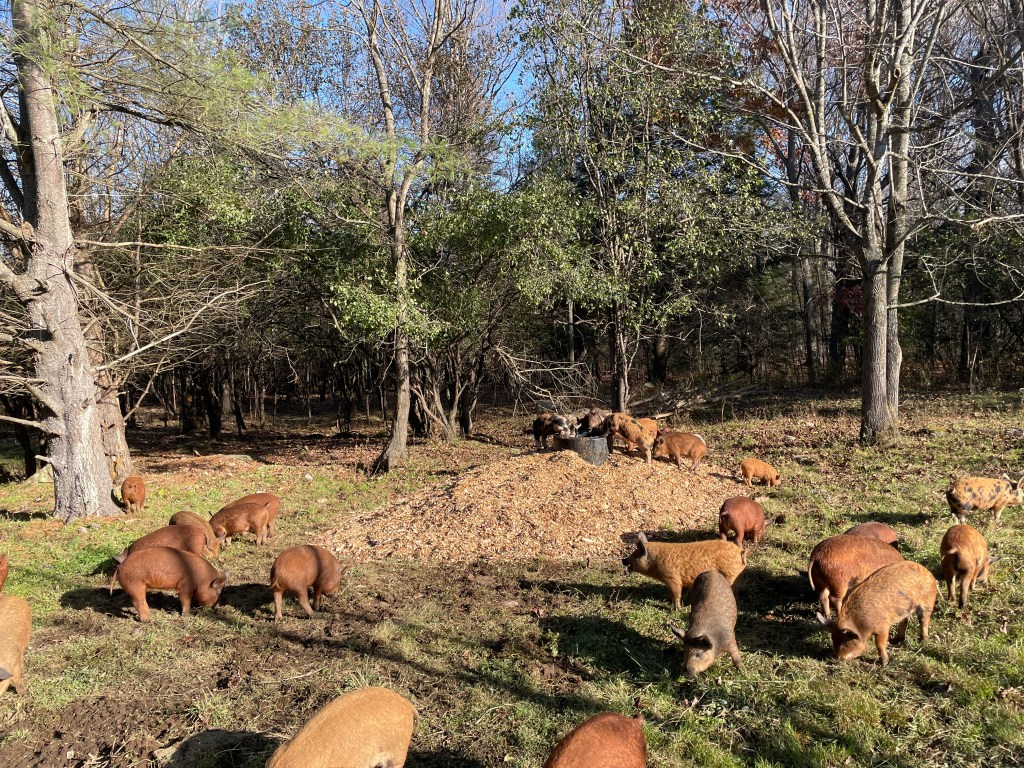
November is setting in and we’ve seen snow twice, and mornings are frosty. Chicken and cattle have left the farm for the season and only the new batch of piglets explore the woods and pastures. Racey, Healey, Kirsten and Holly have been busy packing orders during a busy month when folks get ready for the holidays.
I have struggled this fall to find that pace, which inches towards calm as the leaves turn and the wood stove starts my morning routine. Projects have kept me busy this fall. This year’s fall piglets came earlier in the season and with more familiarity to the ways of living outdoors. So they have been moving through our woody pastures towards the “solar barn” where they will have a permanent roof and dry bedding all winter long.
As a family we are headed to my parents place on Cape Cod for Thanksgiving and we will be away from the farm. So along with the usual menu and travel planning we are also getting ready to make the farm easy to take care of in our absence.
One challenge with keeping animals in our climate is that our winters are cold. Sometimes VERY cold. We will often see -20 F or even -30 F during a winter. With shelter from the wind, and plenty of hay to snuggle in, our pigs stay toasty warm even at these temperatures. But drinking water is the real issue. How do we keep water warm enough that the pigs can drink it, not just chew it:)
Hearty pigs are able to eat snow to stay hydrated, but this does take more energy and slows down their growth. We can put a water trough with an electric heater in the barn, which costs between $5-10/day to run and takes up valuable snuggle space in the barn. So this year Racey wondered out loud to me as we were walking the winter pig area…”what about the cattle waterer?”
We have a really creative water solution for horses and cattle which we purchased a few years ago and installed. It is essentially a massive insulated tube 3 feet wide by 9 feet long that we set deep in the ground. A buried water line comes up through the insulated tube and fills a small 20 gallon water trough by means of a float valve that sits down inside the insulated tube. The heat from the ground 9 feet down rises up through the tube and keeps the water from freezing.
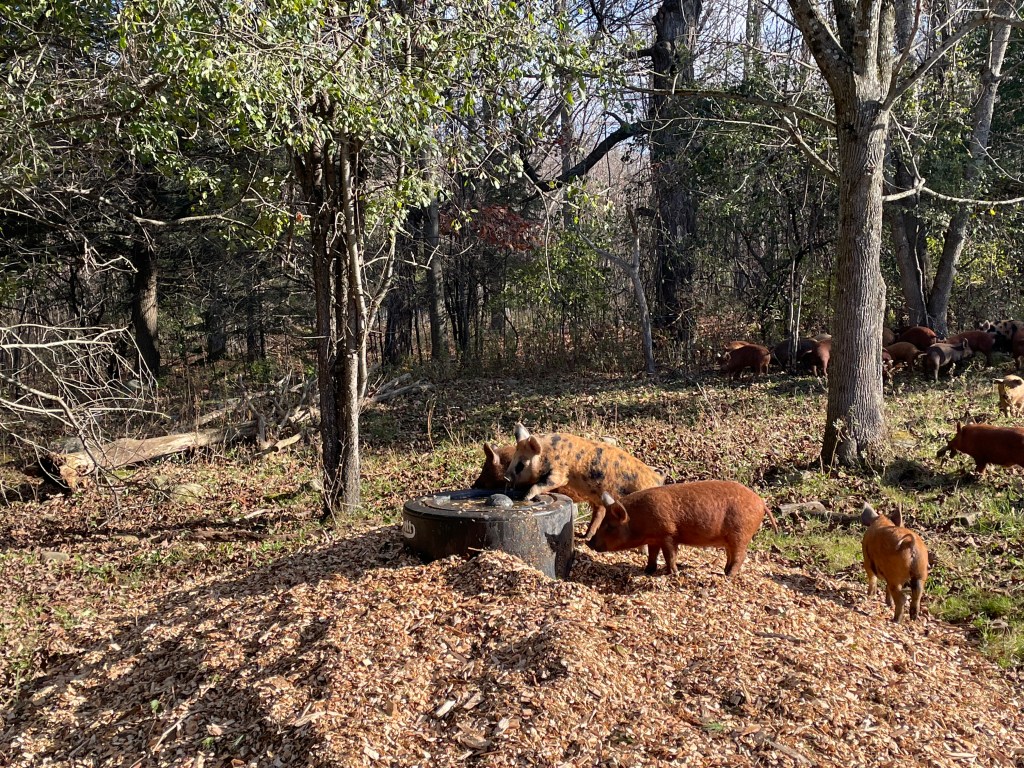
The waterer height was too tall for a little piglet, but was close enough to the solar barn that maybe it would work for pigs. This week we experimented by bringing some wood chips to raise the ground level around the waterer and let the pigs take a gander at drinking from this new technology. Not surprisingly the pigs went straight for the chips, and ignored the waterer.
I sat and watched them for a while. Digging and rooting in chips was the favorite activity, chips smell wonderful, root easily and are fun to chew on. After the novelty wore off, and they had pushed around the wood chips such that I was worried they would no longer be able to reach the water, the first few curious piglets began to nose around the waterer. Eventually they put their front feet up on the rim of the waterer and began to slurp loudly at the water. This sounded fun to a few other piglets and soon they all took a drink from the novel water source.
In our brainstorming Racey and I wondered, could a pig drink from this? Would they have trouble? What if they push all the chips away and can no longer reach the water? In the end they were curious enough to find the water quickly, agile enough to easily stand on their hind legs and drink, and piggy enough to root in the chips making the waterer taller with each snout scoop.
For now we are thrilled to have a working frost proof water situation albeit it takes me a few minutes in the morning to shovel chips back up towards the waterer to make sure the smallest piglets can reach the water. Now that we can see how well it works, we will someday pull the chips away from the waterer and put dirt and gravel up to the proper level for a more permanent solution.
Freezer update
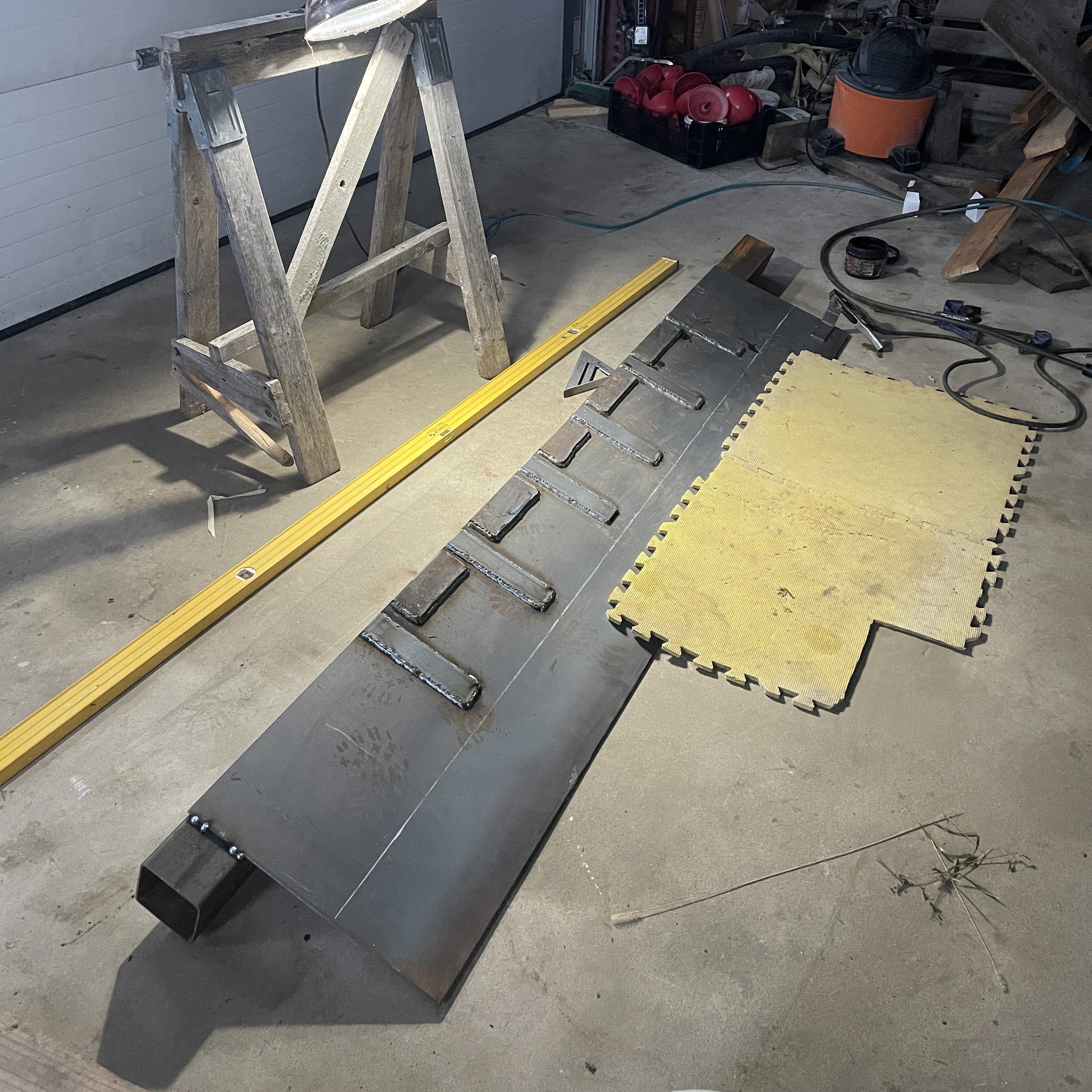
As the cold weather sets in, the hole in the wall of our packing area is making for some cold fingers and chilly mornings. To finalize the junction of the new freezer to the packing area I have scooted the freezer as close to the barn as possible, while still being able to squeeze in between the barn and the freezer. Next I’ve been working on a pallet ramp so we can easily roll in and out of the freezer with heavy pallets or carts.
I had a temporary plywood ramp that already has a hole in it from a particularly heavy pallet, and it was beginning to swell and rot from the constant condensation and moisture of living right up against a freezer door. So I purchased a piece of steel plate from our supplier J&S Steel in Plattsburgh, and home I went ready to throw the plate in place and start closing in the gaps.
It has not been so easy…
I welded some extra supports on the ramp where the pallet jack wheels go to keep the ramp from bending or warping over time. In the process of welding them on, the ramp itself started to warp from the heat of welding. I had been careful to weld slowly in an attempt to keep warping minimal. So I welded the whole thing to a steel tube I had in the shop. When I finished, my once straight ramp was now curved like a banana.
So I hemmed and hawed, and scratched my chin. I tried putting the ramp in a press. I tried heating it. Then I tried jumping on it and this made some progress. Inspired, I jumped some more and got out the sledge hammer. And with some enthusiasm and good hearing protection I pounded the ramp into a version of straight that was good enough for me.
Triumphant, I went to set the ramp in place and found that my support idea for how to hold the ramp up to the threshold of the freezer door simply did not work. I could not get it in place. So I’ve left that project to rest for the time being and I’ll pick it up again this week.
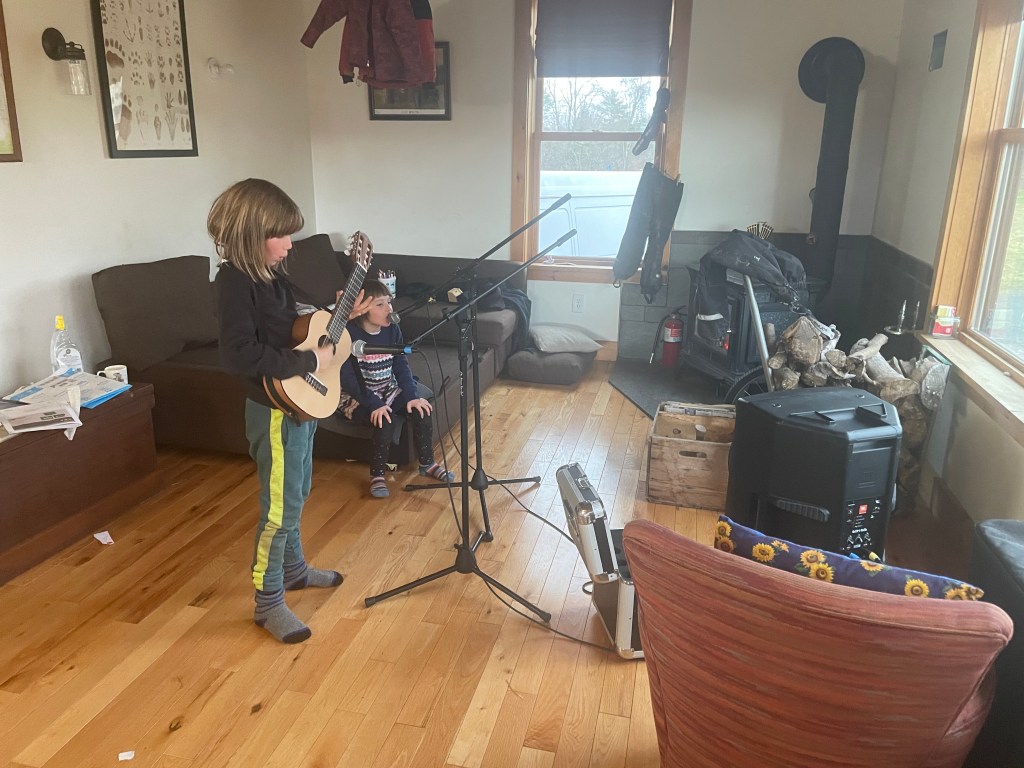
I’ve been selling our band’s PA system this month, and so the kids have been helping me test new and old sound speakers!

