
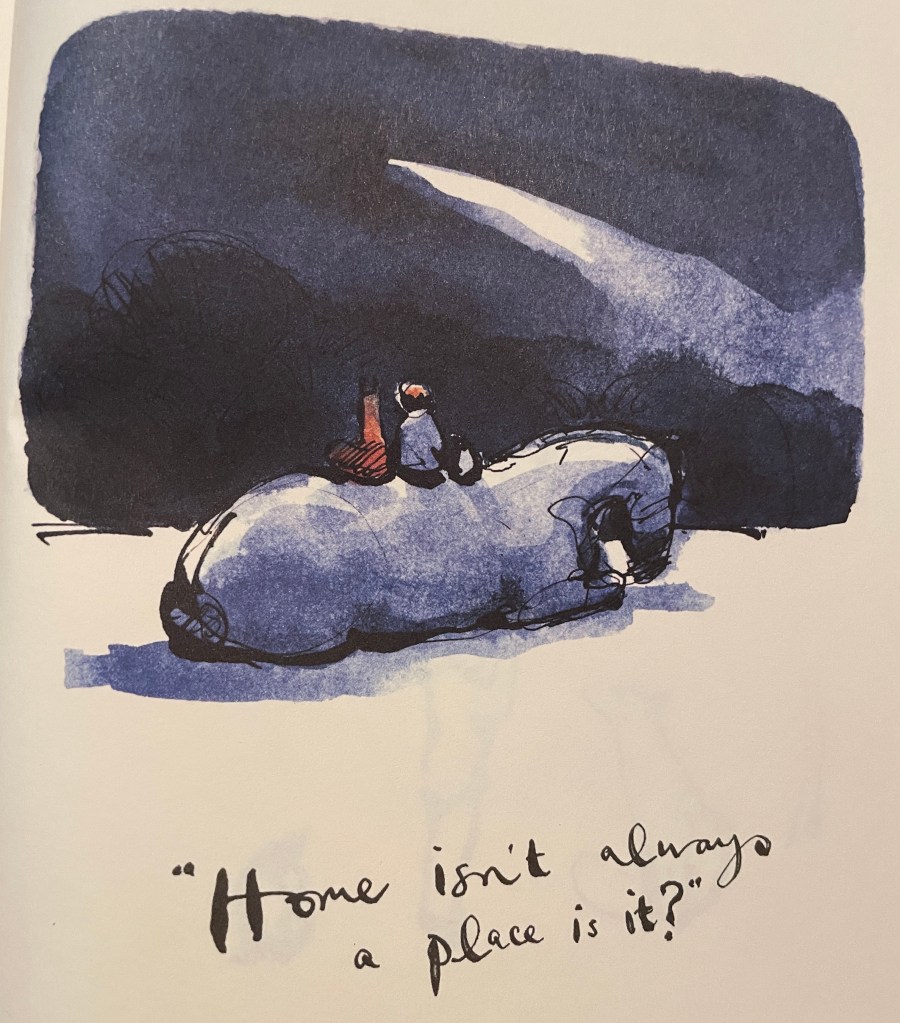
On Wednesday of this week we packed up our bags for the last time, loaded them into our car and started the last leg of our trip to our “Essex Home.” We’ve had a few different places we called home in the last six weeks of living away from the farm. For Lewis and Lovett the word home has not changed much in their short lives, it is the place we go back to, and also happens to be a farm in Essex, NY. But as we packed our bags and boarded a plane we left that home behind, and the place we would now return to each day was a different home.
Home is both a feeling and a place. When we have gone out for an adventure and Lovett is feeling tired she will often declare: “I want to go home” or “when are we going home?” but vocabulary, we’ve learned can change with place. So we had to use new words to refer to that now far-away place called “Essex Home,” which as the weeks stretched on became more of a memory than a destination.
We had our Bangui home in the Central African Republic where the weather was hot and humid, most people had different color skin, spoke either French or Songo and dinner was never burritos. We had our Madrid home in Spain where the sun was warm but the morning air was crisp, our French words were not as useful and Songo even less so and dinner never resembled burritos. We had our “mountain home” in small town of Navalsaz, Spain where we spent Christmas with some dear friends, the mountains and open sky was familiar and burritos were still absent from the dinner menu. Finally we rode the long plane back to Boston to my parents house where every one seemed to speak English, there were some familiar toys, and burritos were waiting for us at dinner.
“Are we really going home, to our Essex Home?” Lovett asked me as we buckled our seatbelts and waved goodbye to Mimi and Popi. They invented a game as we drove north from the soggy streets of Boston up through New Hampshire and into Vermont, they called it the “snow game.” Lewis summed it up as follows: “you look out your window and I’ll look out mine. If we see snow out our window we make a happy noise, if we don’t see snow we make a sad noise.” The snow cover slowly became more consistent and we had to put some volume limits on the happy snow noises.
We arrived home in the early evening dark that define our northern winters. The crunch of the snow underfoot, the slippery steps, the sway of my makeshift railing and the location of the mudroom light switch all brought back the strange and familiar sensation of home. As I walked through our house and turned on a few lights I was reminded of some forgotten cliche passage in a distant novel about how the forgotten-familiar looks when returning home. The shadows on the ceiling, the color of the pine beams and the gleam of the anorthosite counter tops all had a luster that I did not remember. As if the every day tarnish of normalcy was scrubbed clean in our absence and I could see, if briefly, the bright colors of home.
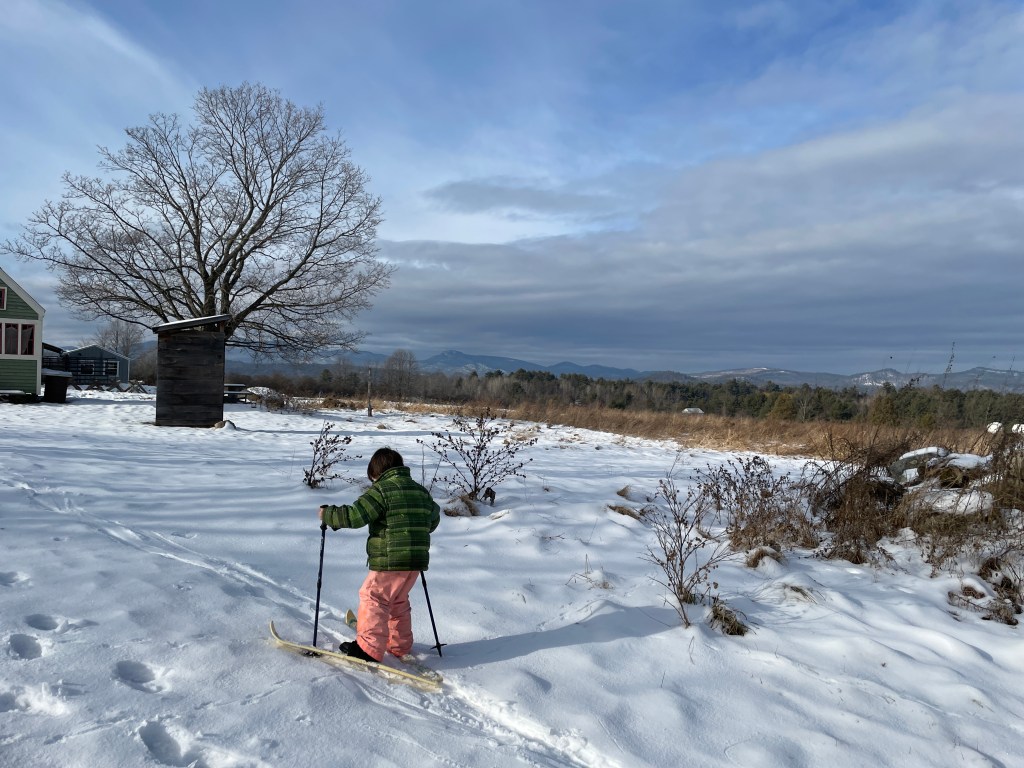
The next morning, after breakfast, Lewis and Lovett announced they were going outside to ski. We were surprised to find that in a few short minutes they each had donned their full snow gear and were headed out the door. They trekked down to the storage shed where we stored the skis. Our winter gear is stored in an old chest freezer, which is not the easiest place to retrieve skis and poles for a 4 and 6 year old. Nevertheless within a few minutes we could see the both skiing back towards the house. Silently proving that when we forget the limits we silently self impose, so much is possible.
Happy New Year.
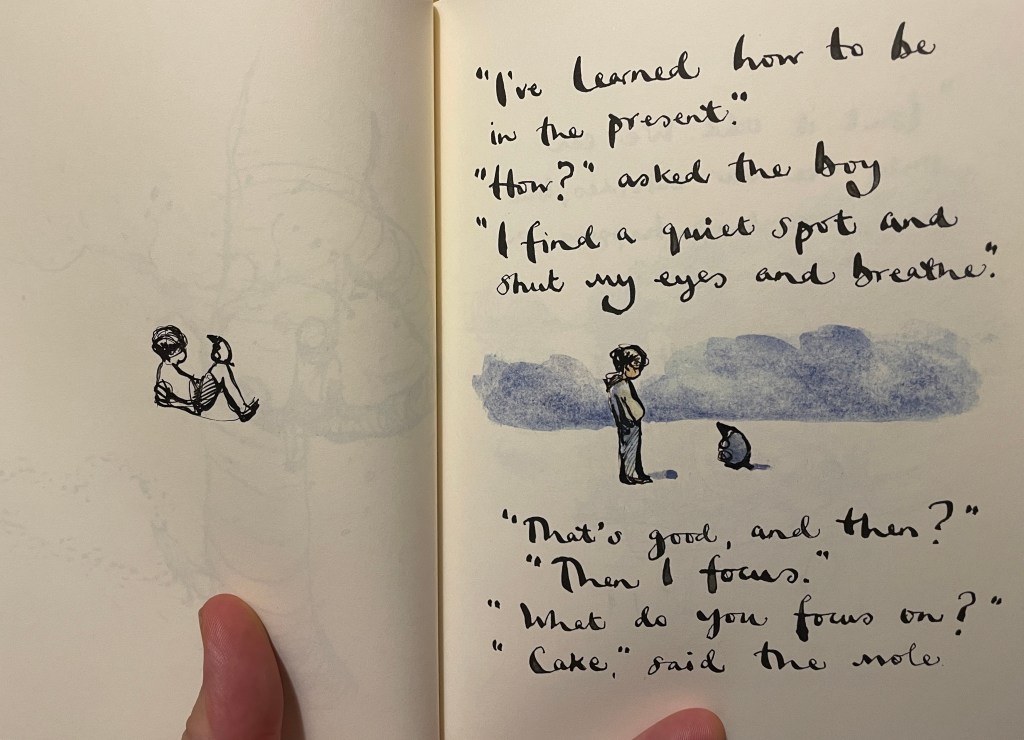
We received a wonderful book recently called The Boy, the Mole, the Fox and the Horse by Charlie Mackesy. The picture at the top of this note is from the book and I’ll include one more image in closing.


One thought on “New Year’s Home”