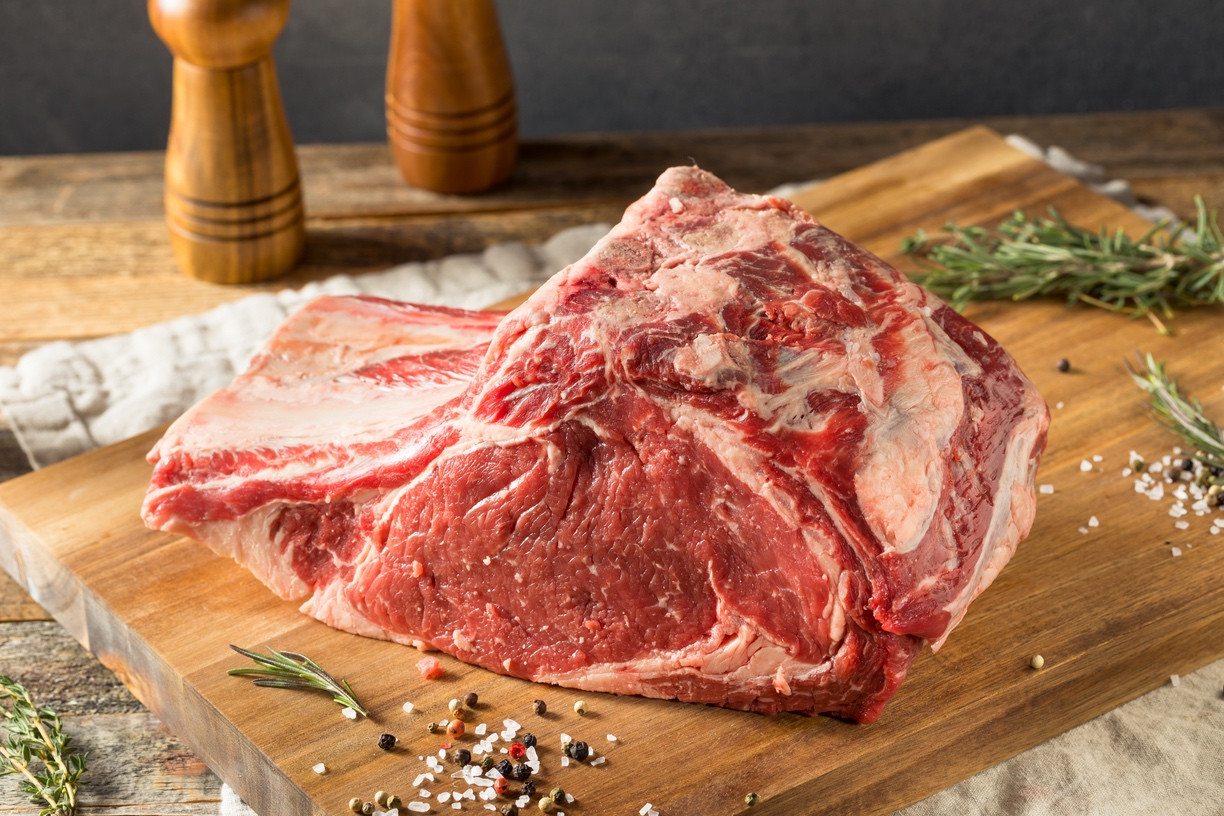
I mentioned last week that we had some prime rib roasts available for this holiday season, but I needed to confirm the size of the roasts. After some long distance sleuthing by Holly and Gwen, I have listed the Prime Rib Roasts on the website. They are each 4 rib roasts, which means that they have 4 rib bones, and they each weigh about 10 lbs. These are roasts that I would be proud to have in my freezer, as we often have had, and I also know that a roast this size can be intimidating.
So I thought I would write about the Prime Rib Roast this week. As I sit down to write this, I realize that my usual process of sharing my experience is to take on the recipe and document the process. This usually involves getting the cut from the freezer, thawing the cut, waiting for some good sunlight in the kitchen to take some pictures for the website, then making the recipe and posting a note on the counter to remind myself to take pictures while cooking. Right now, I’m far from my kitchen and the cut in question is too valuable and in short supply for what would be a delicious test recipe.
Size is often the first consideration when purchasing a roast for a large gathering. Of course this depends on how many people are coming, how much you expect those guests to eat, and what other dishes you are offering for the meal…but as a basic rule of thumb is 1/2 lb of meat per person if we’re talking about . However, I would also add that we need to take into consideration the presence of bone into the equation of weight in our roast. Our Bone In Prime Rib (also called a Standing Rib Roast because it rests with the bone standing up) has a delicious amount of bone that adds to its depth of flavor and weight. So for a large beef roast like this one with lots of bone I have found that my rule is more like 1 lb of bone-in meat per person.
My recommendation is that our 10 lb, 4 rib Prime Rib Roasts are suitable for 8-10 people, but keep in mind that there is wonderful beef broth to be made from the roasted bones afterward, which in my opinion is the second best part of this cut of meat.
But how to prepare the roast?
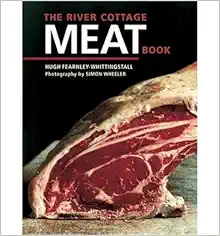
I would be curious to know what percentage of our customers and blog readers already have this book on their shelves? The River Cottage Meat Book by Hugh Fearnley-Whittingstall is inspiring in many ways, and it is no surprise that the cover photo is none other than our roast, the Standing Prime Rib Roast. In my opinion, a good recipe is just as much about the ingredients as it is about the process and Hugh does justice to both.
The recipe itself is simple, and while I cannot put my hands on a copy of the book, my memory and a few google searches confirm the simplicity of the recipe and the process. I’ll outline it here with a few of my own personal recommendations from experience. Nevertheless the book is worth the read for its depth of descriptions, exquisite pictures and follow up gravy and broth recipes.
Standing Rib Roast Recipe
Adapted from the River Cottage Meat Book by Hugh Fearnley-Whittingstall
- Thaw the roast slowly in the fridge, allow a full 36-48 hours to thaw in the fridge.
- Preheat the oven to 450 and set the oven rack towards the bottom.
- Rub the roast with some olive oil, salt and pepper. If you’re a garlic lover, take a knife and make a few punctures in the outer layers of the roast and stuff the garlic into the hole.
- For the most even cooking use a roasting rack and position the roast with the ribs on the underside and the meat and fat facing upwards. Place the roasting rack in a roasting pan large enough to catch all the drippings from the roast.
- Place roast in the oven for 30 minutes at 450.
- The purpose of this step is basically an oven braising and browning of the meat. It makes the fat covering a delicious crispy treat, and adds flavor to the meat. This step can also make a mess of your oven with all the splattering of the fat drippings. My recommendation is to put the roast low in the oven and to plan to clean the oven after you make the roast. Cleaning that evening or the next day has saved me some scrubbing time before the splatters get charred into the oven walls and door:)
- After the roast has a nice golden crisp to it, turn the oven down to 350 and roast until desired doneness.
- Remove from heat and cover with tin foil and let rest for 30 minutes before serving.
Hugh’s cooking time recomendations:
Rare 9-10 mins/lb
Medium rare 12-15 mins/lb
Medium 18-20 mins/lb
I recommend using a meat thermometer since ovens can vary and we have overcooked too many roasts based on minutes/lb calculations. Insert the thermometer in the center of the roast, and tend towards the bone side where the meat cooks most slowly. Remember that the roast continues to cook after we remove it from the oven. Remove from the oven when you are 5 degrees shy of your desired doneness.
While the roast is resting Hugh recommends putting the roasting pan directly on the stove top and making a gravy sauce from the drippings. I prefer a thicker gravy so I tend to scrape the drippings and make a separate gravy.
It is often daunting to cook the day after a holiday meal, but I promise it is worth it to make a beef broth from the leftover beef bones from this roast. Roasted bones make the best broth, and you’re already half way there. Hugh has a detailed broth recipe in his book, and I’m sure many of you have your own recipes.
I know it can be a daunting prospect to take on a roast like this, so don’t hesitate to give me a shout, send me an email at info@reberrockfarm.com with any questions.
 Reber Rock Farm Blog