
Year after year we strive to learn what the land and our farm have to teach us. In our first years I was determined to grow grain and mill flour using only draft horses. With a north sloping, rocky farm we learned that our fields were not well suited to crops. As we listened and learned, our farm shifted to pastures and animals, which were the better fit for the land.
As we continue to explore the various micro-ecosystems of our farm we’ve learned that pigs, chickens and cattle all fit like pieces of a puzzle. Each animal group brings biodiversity and nutrient diversity to our farm, and each group thrives in different conditions. Chickens, with their big coops, really appreciate flat fields, where we do not have to turn very often. Rocky, rutted fields make for coops that roll over rocks and have gaps where small chicken gleefully escape in hopes of playing catch-the-chicken.☺︎ Cattle love lush pastures, and pigs love the in-between where pasture meets woods.
When raising our pigs we focus on these areas:
- Excellent quality meat.
- Building soil health and quality.
- Considering and reducing the environmental impact of our production and our inputs (like how the grain is grown to make pig feed).
Excellent Meat Quality
Starting in the summer of 2023 we began raising pigs that are half Berkshire and half Mangalista. These two breeds are prized for their meat quality, you can see and taste the difference.
The story of pigs in all their excellence at Reber Rock Farm starts with whatever the porcine equivalent of the birds and bees is…maybe it’s still the birds and bees? Who the mama and the papa are determines the genetics of how the pigs build muscle, how prepared they are for life on pasture and so much more.
We have always purchased our piglets and chosen not to breed our own sows. Although Lovett has been making a strong case for baby piglets:) We’ll see what the future holds.
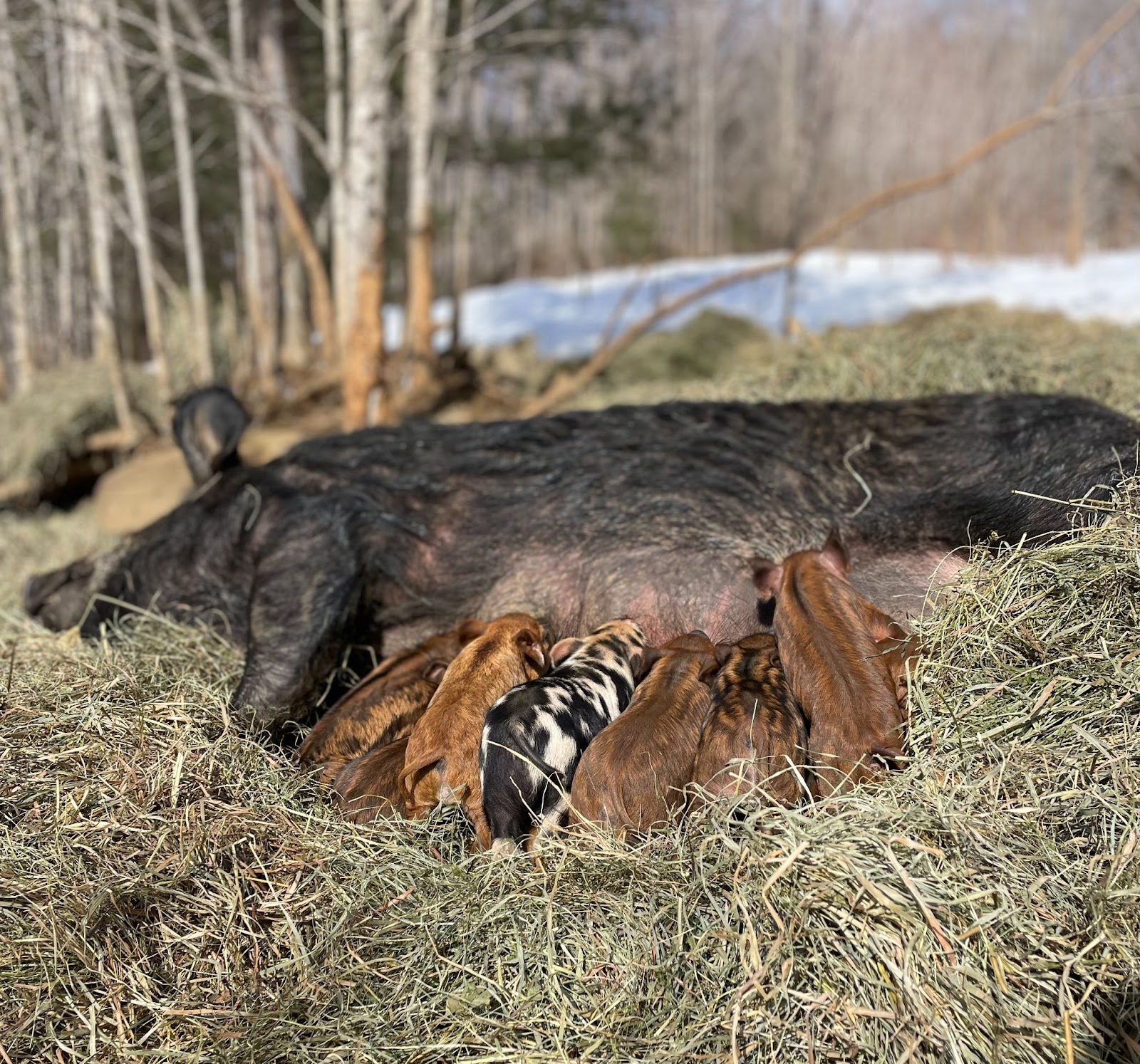
For now, we rely on partnering with High Low Farm in Vermont to manage sows and boars and raise the piglets until they are weaned from their mama sow. Tim and his family raise all their pigs on pasture and in the woods year round. This is the natural environment for pigs, they are hearty animals, and with property bedding and the occasional tarp roof on those cold wet days, they are happiest and healthiest outside.
The sows are effectively a large co-parent group. Each of the mama sows gives birth in close succession with the other sows in her group. They each make a nest in preparation for having her piglets (called farrowing) and after the first few days the sows bring their nests together. For any mothers out there, can you imagine nursing 8 to 12 hungry babies all the time? It’s a full time job. So the sows take turns. Three or four sows will all lie down and let the piglets nurse, while the others get up to feed and take a break. When one sow comes back and lies down, one gets up to grab a bite to eat. Amazing! Racey and I are convinced we humans could learn a thing or two from these mamas.

While Tim and his pigs are not certified organic, he does feed organic grain to the sows and piglets from the moment they give birth, and when cost and administrative bandwidth allows we hope to help him certify. And so these little piggies are well suited to start their lives on pasture. They are used to snuggling up to stay warm, they know how to bury into hay, how to explore and root and play in the dirt.
Good breeding, healthy mamas and piglets, and plenty of playing in the dirt make for some of the healthiest and tastiest pork.
Building Soil Health and Quality
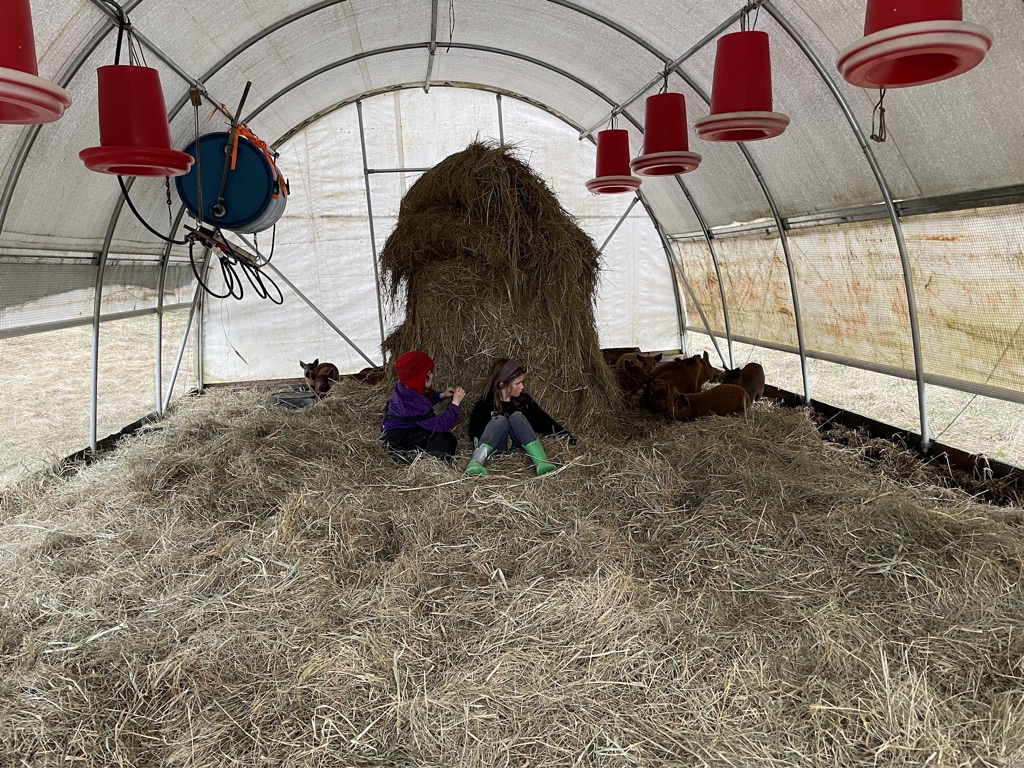
Piglets spend 6 weeks with their mamas before they are weaned and brought to our farm. When they arrive they have much to learn about how to take care of themselves on their own, where to stay warm, get water and find food and of course what an electric fence looks like. Zap! Ow!
We offer the little piglets a chicken coop for a few weeks to give them shelter, and a physical barrier to begin learning how to respect an electric fence. Any time of year, pigs love to root with their powerful and sensitive snouts. This can be revitalizing for pastures, and if left for too long in any one spot pigs can be destructive. (Like any animal group, too high a density, and too long a time of impact can be damaging to the soil.)
So we move our pigs frequently just like chickens and cattle. Frequent moves mean the soil is never compacted from too many animals in one spot for too long, and this keeps our perennial pasture species growing. Grasses, clovers and other pasture species are impacted by animals taking a nibble, and then they need time to regrow. Our general rule of thumb is no longer than 3 days in one spot, which is the time it takes for grass and clovers to send up new chutes after leaves have been eaten. This has the added benefit to the pigs of drastically reducing the potential for parasites and disease to take hold in the soil.
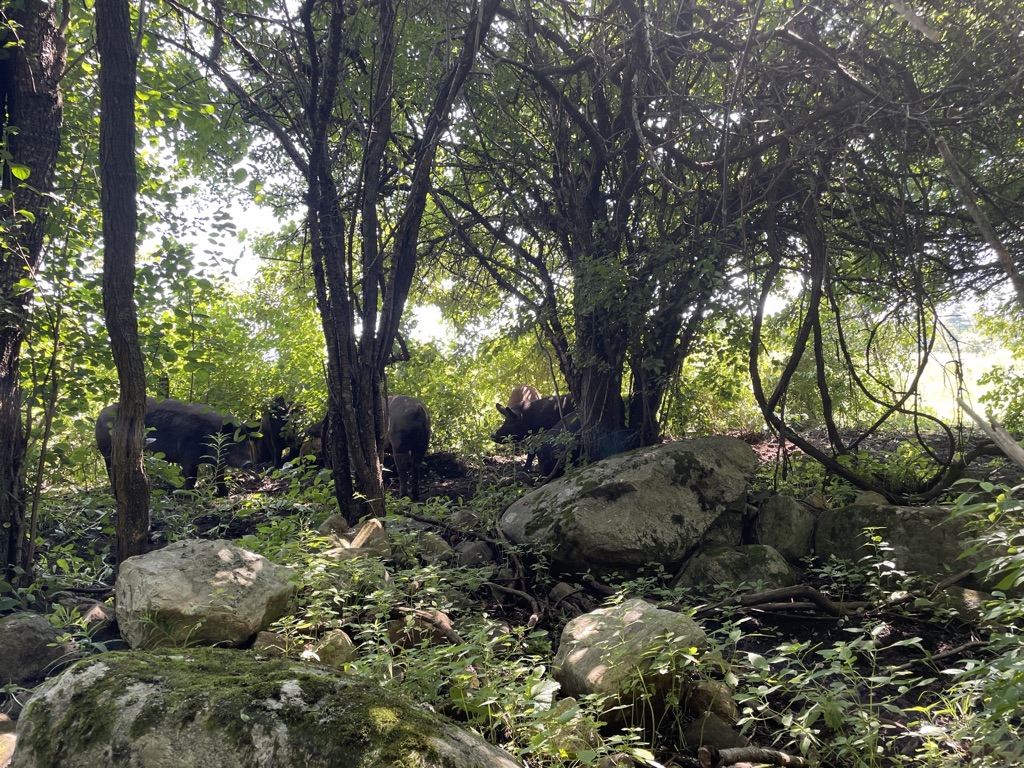
Healthy pigs, healthy soils. It’s a win-win.
Considering and reducing the environmental impact

Not only do we promote healthy soils and healthy pigs on our farm, we always strive to promote the same in all the businesses that make growing our food possible. This starts by working with Tim in his pasture-based farrowing operation, and he now feeds organic grain to our “group of sows” where our piglets come from. This also means we feed organic grain to the pigs when they get here. Because the piglets are not certified organic, our pork is not certified. Nevertheless we treat them as if they were organic and that means they NEVER get any antibiotics, hormones, and they never get a drug called Paylean which is given to pigs to keep them from putting on fat, which is now banned in 160 countries…I didn’t even know this was common place in the US until recently.
We are proud of the pigs we raise, they live their lives to the fullest, bringing fertility and soil health to the land, excellent flavor to the table and health and resilience to our food system.
 Reber Rock Farm Blog
One thought on “How We Raise Pigs”