
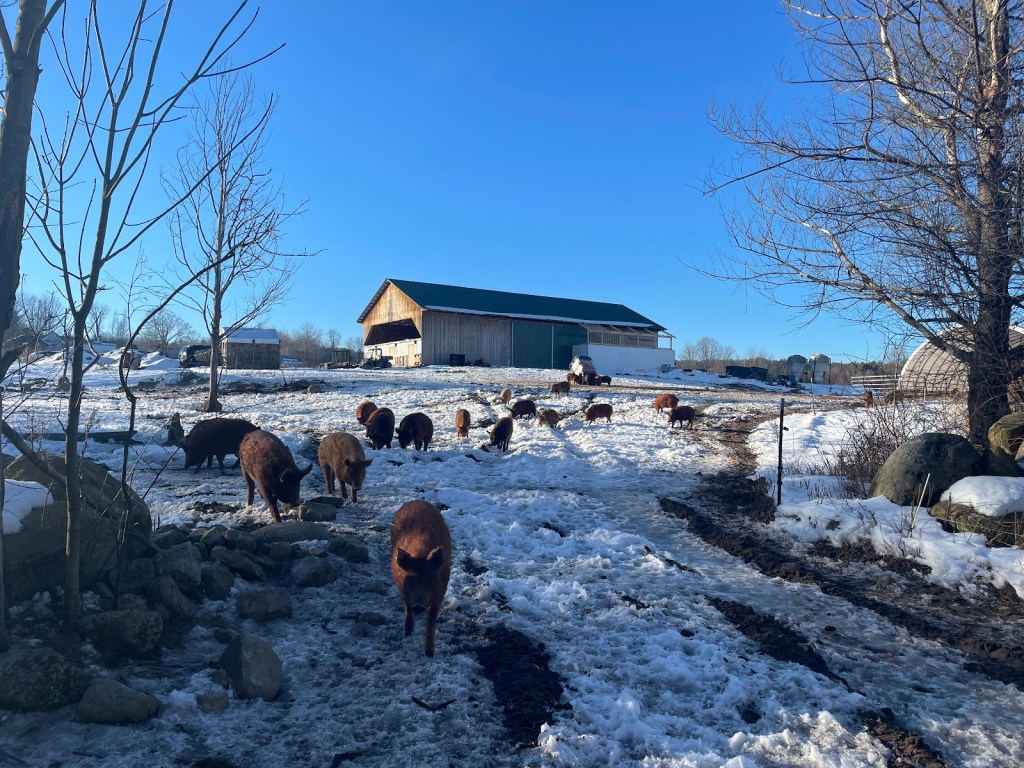
February is usually the month where we settle into winter. The pigs typically have built a deep nest of hay bedding and on cold mornings we often only see their ears poking up through the hay from the pile of pigs. The ground is frozen by mid February, and the early winter struggle of mud and ice solidifies into a cold, hard winter. We heat our house with firewood and February means the wood stove is burning all day and then again after dinner to keep the house comfortable.
This year the weather has reminded us constantly of how patterns we thought we knew are changing. We had unprecedented rain throughout the whole summer and we were spared some of the very serious flooding that our friends in Vermont experienced. Fall was mild and wet, and earlier this winter we had flooding rains that washed out roads and brought our rivers to that pounding fervor reminiscent of spring. With weather this week bringing highs in the 50s it hardly feels like February.
I walked down to the pig waterer to do my morning check on an unusually warm Thursday. The previous afternoon had brought sun and heat such that muddy pig snouts meant I decided to clean out the pig water. I pushed up my sleeves and bucketed out the water trough, letting the float valve fill it back up with fresh clean water. The pigs love this process and they play and slip on the temporary stream I make with splashing bucketfuls of water. I found a patch of sunlight and shook my wet hands dry as I welcomed the warmth of sunlight.
Amid the snuffles and grunts of the pigs playing in the puddles and jockeying for a spot at the waterer I wondered at the cost of weather? Racey and I have spent weeks crunching our numbers including losses due to weather. We regularly get emails from the USDA or Farm Service Agency reminding farmers of the disaster relief funds or crop insurance claims available for the 2023 season, and I have a number of email and text conversations with farmer friends about mitigating winter mud this year. Farmers big and small must be feeling the financial repercussions of the recent weather patterns?
With a curious pinch of a pig on my boot toe I was brought from my reverie back to the sunshine and the mud. With a smile I marveled at the irony of the cost of weather. As far as I understand it there is a clear link between human activity and the changing weather patterns. And so much of this human activity is an attempt at making our lives cheaper and more convenient. Take our food system, 99% of our crops use synthetic fertilizers to boost yields, lowering the cost of production to make food commodities cheaper. At the same time the production, transport and use of those fertilizers contributes to weather patterns that make growing those crops more expensive. Where does this cycle end?
I am grateful for all our customers who support our efforts to reverse this cycle. I do not see a silver bullet or an easy fix, but we are always learning and thinking about how to produce our food in a way that contributes to balance in our natural system.
Happy Lunar New Year!
 Reber Rock Farm Blog