
What is in your lunch? We have been loving Sliced Ham in our packed lunches for the kids!
We have a few new and exciting products to share! We’ve had them for a few weeks now, and with the prep for thanksgiving and projects I have not had time to share them with you. This week I would like to introduce our Pork No-Nitrate Smoked Sliced Ham. Save up to 10% with our introductory savings.
I was recently talking with my parents about food because I had noticed that I had many assumptions about what I considered “processed food.” As a kid these foods were “bad” and as a health conscious family we did our best to avoid these foods – like deli meats, hot dogs etc.
Of course as a child these forbidden foods were also more alluring, though not always as satisfying as the temptation itself. Over the holiday I told my parents how excited I was about some new pork products we had gotten back from the processor, and one in particular that was a new item in our kitchen: sliced ham.
I explained that this ham, unlike most ham and deli products you find at the supermarket, only has two added ingredients: salt and sugar. The ham is deboned, net wrapped to hold its shape, then put in a machine called a tumbler, which is just what it sounds like, and the hams are “tumbled” with salt and sugar. Next the hams are hot-smoked. This means they are taken out of the tumbler, rinsed, dried and then put in a room where wood smoke and heat cook the hams to 150F and impart that distinctive smoke flavor.
Wait…my parents asked. So there is nothing else in the ham?
So what makes processed foods “processed” they asked.
“Processed” can mean so many things! I realized in talking to my parents that, basically, adding any form of spices and seasonings is lumped into the category of “processed.”
Here’s how I explained how I think of food processing and how I decide what is “good” processing and what type of processing we avoid.
Rule #1 – Would I use it in my kitchen?
If you ever have any doubts when looking at an ingredient label, just ask this question – would I use it in my kitchen. In the case of our Sliced Ham, would you rub salt and sugar on a ham? I would. Some folks might be concerned about limiting their salt intake, or watching how much sugar they eat. It is the same in your own kitchen, if you were making it at home would you use that ingredient.
Another example would be pork or chicken sausages like our Pork Sweet Italian Links or Chicken Curry Sausage. We call these sausages “fresh” sausages, since the meat remains uncooked. Sweet Italian has Salt, Fennel, Black Pepper, Paprika and Garlic added. Our Chicken Curry Sausage has sea salt, organic curry powder, fresh chopped organic garlic, organic white pepper, and white wine. These are all ingredients you can find in our kitchen and we use regularly in our daily cooking.
We were away from our home for thanksgiving, and I forgot to bring some of our pork lard to make my favorite recipe for pie crust to go with my pumpkin pie. So I thought, what the heck, let’s see if we can find lard in the supermarket. My mom, the diligent shopper, finally found it with the help of a friendly supermarket employee. The lard contained BHA (butylated hydroxyanisole – [The NIH reports that BHA is reasonably anticipated to be a human carcinogen]. I do not have any BHA in my kitchen….
Without diving into chemistry and history of BHA, it is a good example of a general trend. Many, if not most food processors add chemicals to food to help them last longer, which in turns makes them easier (and likely less expensive) to transport and distribute.
Oh, the things we do for profit.
Rule #2 – Is it necessary to keep food safe?
In some instances, like curing meat, there are certain toxins that can develop even when you take the utmost care. These toxins, the most harmful of which cause botulism, are prevented by using simple chemistry that sausage makers figured out centuries ago when they added certain salts when curing sausage. These salts, which we now know contain sodium nitrate and sodium nitrite can also have negative health effects and so are a balancing act. In my opinion, moderation is key.

Reber Rock Farm Sliced Ham is:
✓ Made from simple ingredients you can find in your own kitchen. Salt, sugar and woodsmoke from smoking.
✓ No nitrates of any kind needed to keep this safe to eat.
✓ No preservatives or additives.
✓ Ready to eat as soon as it thaws, try it in a sandwich, rolled up on a cheese board or in an omelet
Pig feeder update

I finished the homemade-free-choice-pig feeder this week. From the very helpful folks at FarmBuilder.us. We used rough cut white oak, cut sustainably using draft horses by the marvelous Chad Vogel of Reber Rock Draftwood. The pigs were thrilled to have something new to chew on and rub against.
After some significant rain this weekend the feeder is working beautifully! This way the pigs always have fresh feed available and it doesn’t get wet and muddy when it rains or they are able to get their feet in it like with the regular wooden troughs.
Yipee!
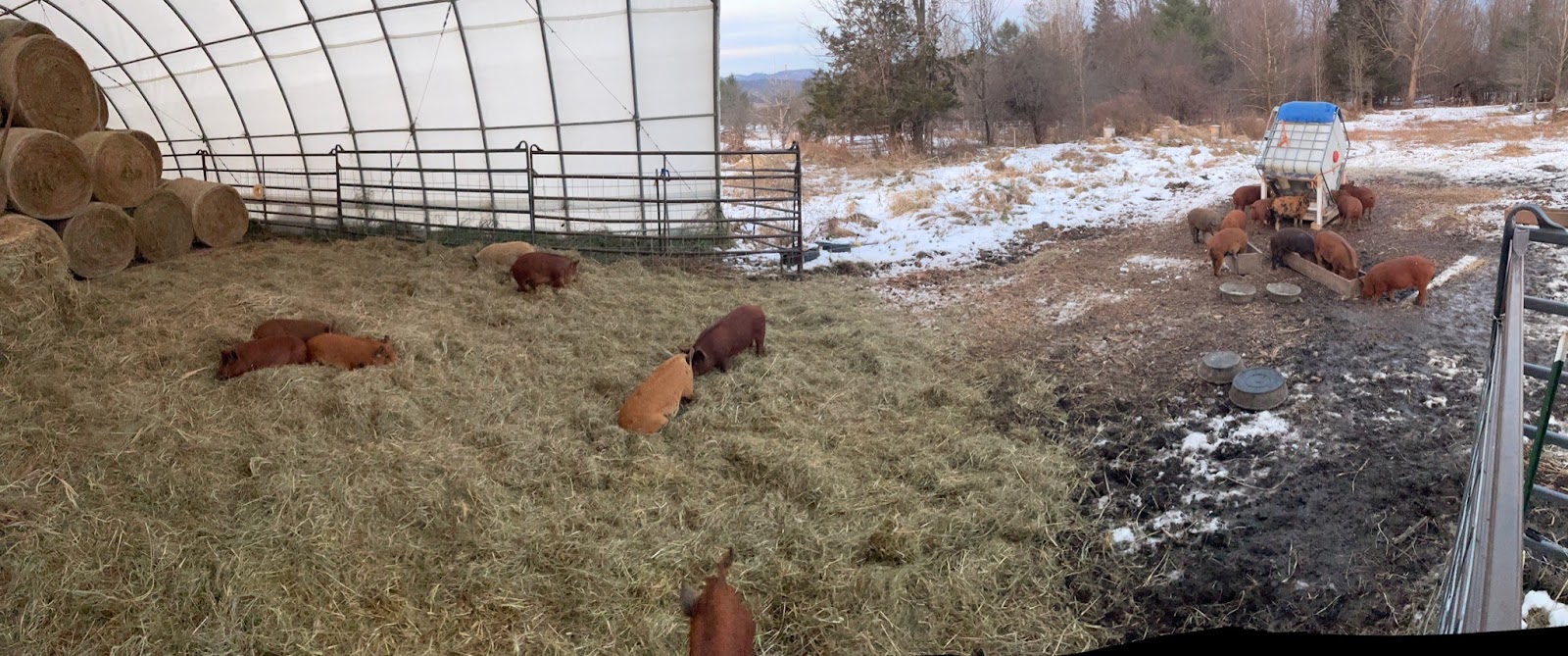
Here is a fun panorama of the barn with dry hay bedding and the new feeder. We are using woodchips this year to keep the mud down around where they come in and out of the barn.
 Reber Rock Farm Blog