
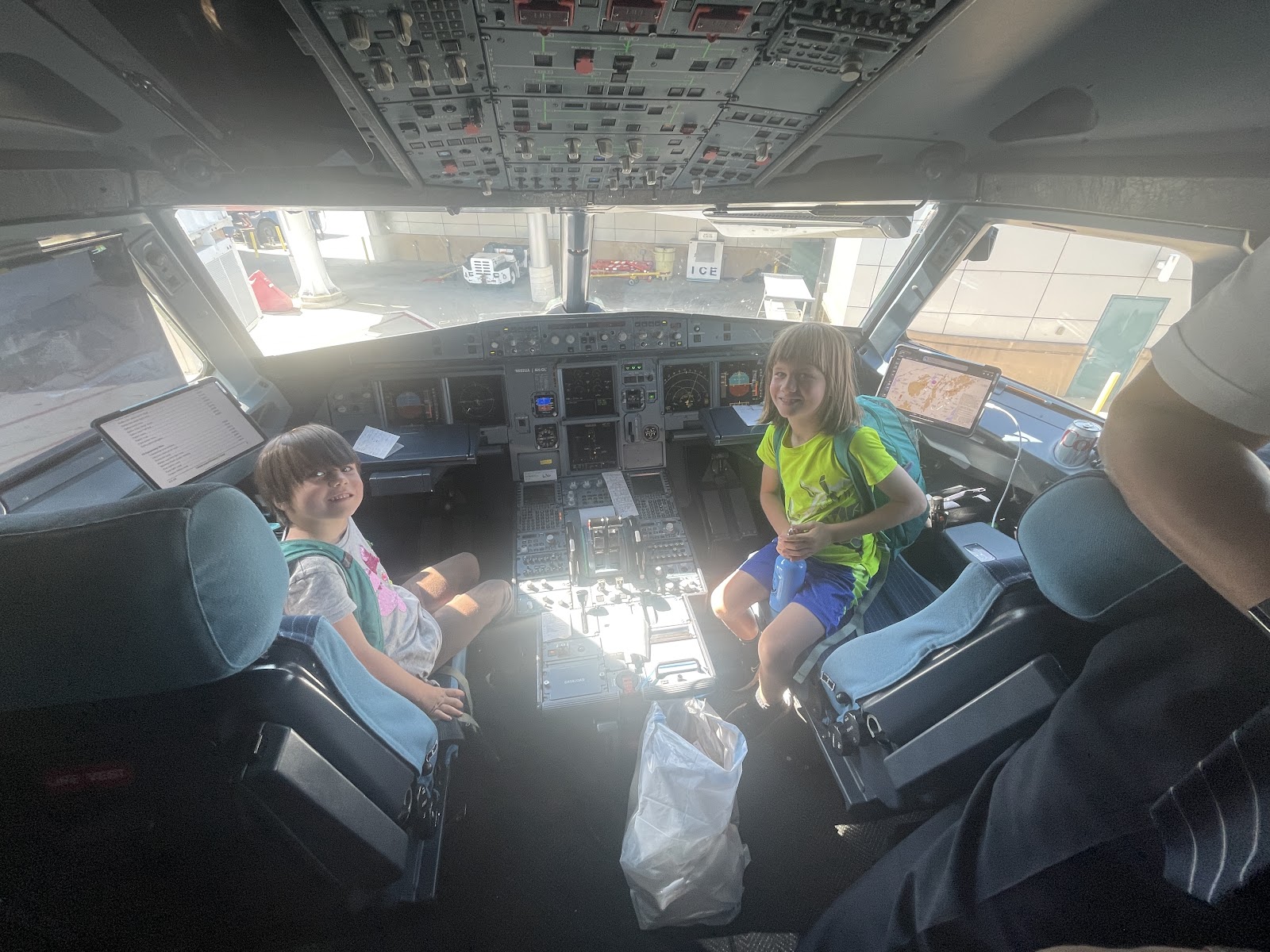
On this holiday weekend I am traveling with Lewis and Lovett all the way to California for a dear college friend’s wedding in the Sierra Mountains. Racey is home on the farm in an unprecedented stretch of 6 days alone on the farm. Time and distance apart from the family and farm always bring insights and reflection. What will it be this time?
As Lewis, Lovett and I navigated ferries, airports, fast food, airplanes, cockpits, layovers, delays and thousands of people all trying to get somewhere, I found myself reflecting on the upcoming holiday, Labor Day. So many other holidays have such obvious names with historical significance. But what is Labor Day except the long weekend that has often marked the end of summer holidays and the return to school?
What is the story behind Labor Day?
I will admit I had to look this up, I had an inkling it had to do with honoring laborers and it was a work holiday. So I was interested to learn the deep roots in labor rights and labor unions that the Labor Day holiday holds.
Beginnings in the Industrial Revolution
With industrialization came a shift in labor and the workplace. Most history texts insinuate the shift from agriculture to factories was all of a sudden a shift in working conditions. Factory working conditions and assembly lines were often brutal places to work, and agriculture was a driving force behind this labor shift. Farms and agriculture were more and more mechanized, productive and led partially to a labor shift to urban areas and factory work.
Perhaps it was the nature of the work, or the employment? Working on an assembly line was different than harvesting your own crop perhaps, and by the late 19th century labor disputes, long hours, harsh working conditions led to the rise of the first organized labor movement.
Pullman Strike of 1894
Various local celebrations to honor laborers were widespread by the 1890s but the federal holiday came about after the Pullman Strike of 1894. The strike was centered in the company town of Pullman, Illinois, where the Pullman Palace Car Company manufactured luxury railway cars. The catalyst for the strike was the company’s decision to cut wages for its workers while maintaining high rents for company-owned housing and other living expenses.
The strike led to disruption of US mail and railroad freight and eventual violence. This led to some federal recognition of labor unions and President Grover Cleveland declared a federal holiday to honor laborers and to quell some of the unrest from the strike.
In my personal opinion I am left wondering about where agriculture fits into this history. The factories catalyzed the labor force to organize. And yet today agriculture and farms have very little union representation. I’m not really sure why.
I suspect that lobbies are at work, and perhaps the fact that so much of agricultural labor are not US citizens and potentially because of this they have been excluded from the National Labor Relations Act.
Politics and unions aside, I would like to celebrate all the people who work hard to help us produce our food. From the organic grain farms that grow the grain, to the folks who work at the feed mill. To our processors and butchers, the community members that support our farm, and the many people that make our farm run every day.
I have written and thought much about the physical inputs into our food. Where does the grain come from? How is it grown? Where do the piglets, the chicks, the calves come from? Labor Day reminds us that there is a human component to our farm inputs and we remain as committed to staying to our values here as well. Health of the whole system is our mission.
Freezer Update
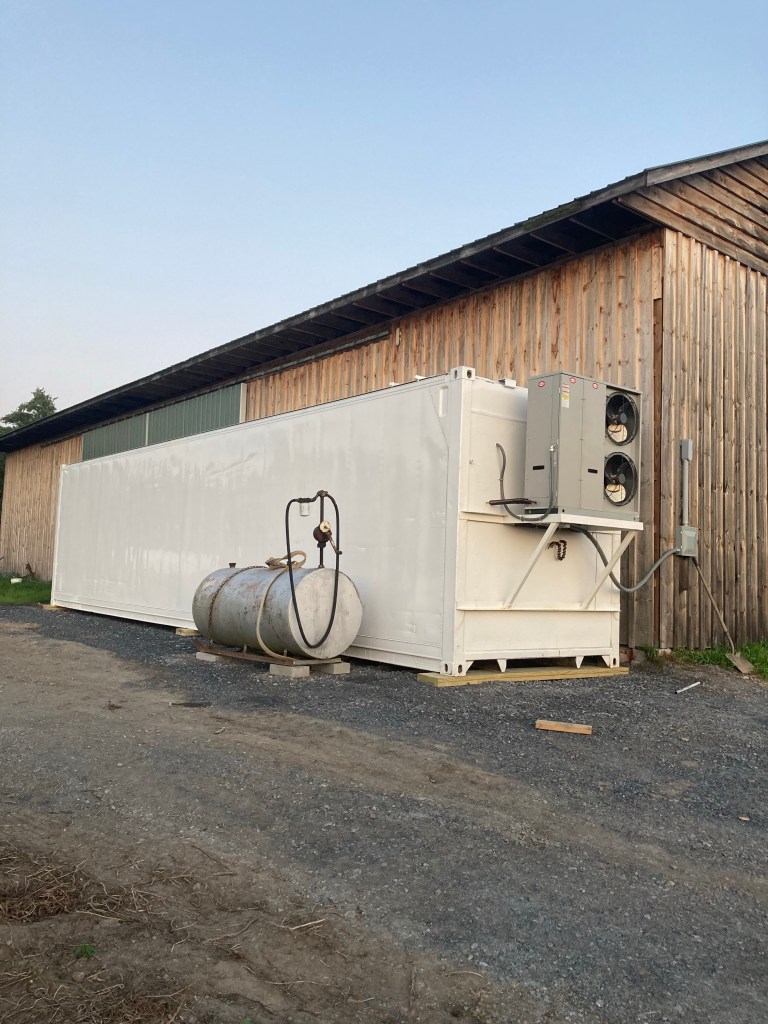
We are still without a functioning freezer. The unit is in place, the lights work, I put in a plywood floor for ease of rolling carts and we are ready. However the unit came with a known electrical problem that the company is working on fixing. This week they came to fix it and found another problem. So we are waiting on parts and crossing our fingers for a functioning freezer next week.
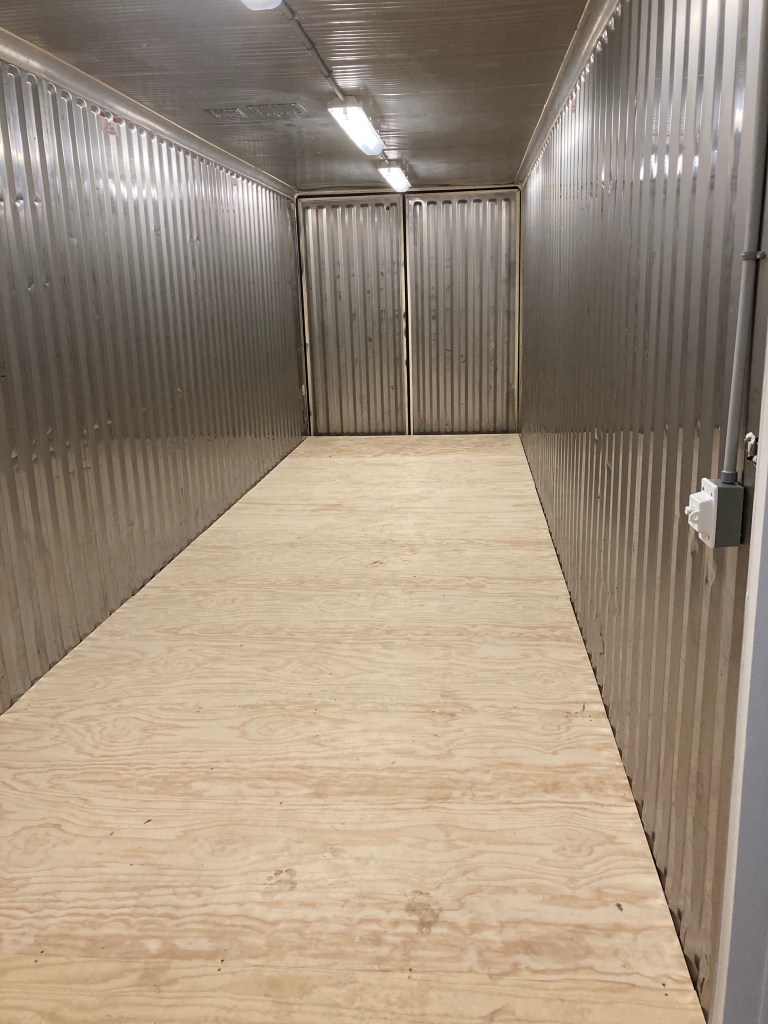
Freezer storage lets us produce our chickens on pasture when our pastures are green and inviting. We hope to put enough in the freezer to keep our chicken in stock all year round. Here’s hoping we can turn it on next week.
 Reber Rock Farm Blog