

On weeks like this the glory of winter’s luster has waned. The crisp crunch of snow on our morning chore walk has been replaced with a slick path of packed snow and ice, which now requires micro-spikes or a few good slips and slides. February can bring biting cold to our farm here in the Adirondacks, but it is also the time of year we begin preparing to make maple syrup. We harvest sap from our maple trees to boil down into the deliciously sweet golden amber elixir we top our pancakes and sweeten our granola with. Maple trees will only generously give their sap when temperatures begin the seasonal shift towards spring. Most often this means day time temperatures above freezing and then dipping back below freezing during the night.
I have no doubt more winter is in store for us, nevertheless the cold snap last week followed by this week’s rain and melting temperatures has us preparing for the upcoming sugaring season. The larger scale maple producers have already tapped their sugar bushes and have perhaps already made the first syrup of 2023. Here in Reber, Chad and Gwen spent the cold days of last week repairing sap lines and preparing to start tapping.
In our house we are settled into winter. One of my favorite features of our life is how our food and cooking evolves with the seasons and each passing year. We cook just about every meal in our house with fresh and local ingredients, which means meals take time to prepare. I love a good beef stew, or chicken soup with muffins, but sometimes between afternoon actives and work we run short on time and need a meal that can come together quickly. More often than not, this meal is some version of burritos. Racey and I prepare and freeze beans we make in the pressure cooker with some hunk of bony meat, usually a smoked ham hock or beef shank. Throw together some vegetables and a dash of meat and dinner is ready.
What cut of meat to choose from the freezer? This is often determined by what time it is and what is thawed in the fridge, and sometimes it is approaching dinner time and I have forgotten to thaw any cuts of meat ahead of time! In this case I turn to my secret weapon: I like to call them the Shy Steaks. Their names do not carry the same weight and fame as the Ribeye, Delmonico, New York Strip, Filet Mignon or Sirloin but they all have unique character, great flavor and value. A perhaps less conventional benefit to these cuts in our house is their shape. These steaks are cut thinner and thaw quickly and easily if set in a bowl of water at room temperature. They even thaw more quickly than a frozen block of ground beef!
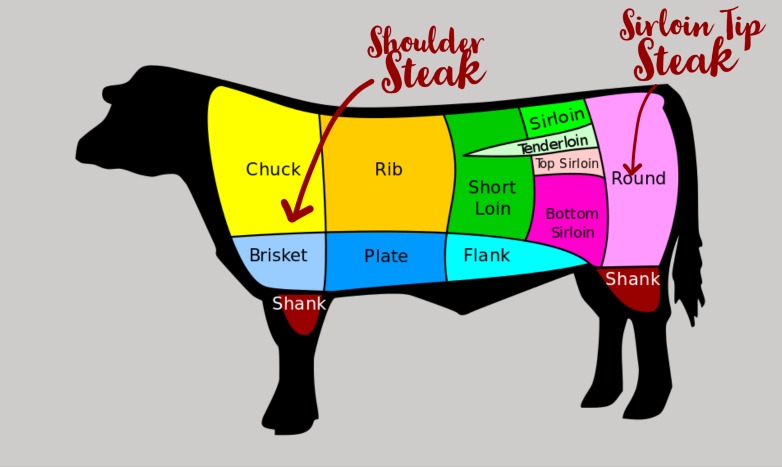
The two most common steaks to top our burritos on any given weeknight are the Beef Sirloin Tip Steak and the Beef Shoulder Steak. They are similar in character and shape, yet they come from opposite ends of the beef animal. As the name would imply, the Shoulder Steak comes from the shoulder area of the beef, where the front leg comes out of the shoulder. The Sirloin Tip however, does not come from the Sirloin! (Why we call it the sirloin tip I still don’t know…) Though a close neighbor of the Sirloin, the Sirloin Tip comes from the large group of hind leg muscles called the round.
Did you know that the word “sirloin” derives from the Middle English surloine, itself derived from the Old French word surloigne, that is, sur for ‘above’ and longe for ‘loin.’ But the best part is that there is a fictitious etymology of the word sirloin! According to wikipedia and a few other sources the name was believed to be “derived from an occasion when a king of England knighted the loin of beef as “Sir loin”. In fact, though the pun is reported as early as 1630, and the notion of a king knighting it dates to 1655, the name predates any of the kings who are mentioned.[5] The story at most influenced the spelling sir rather than sur.”
Knighted beef, who knew?!
How to Prepare Sirloin Tip or Shoulder Steak
Both of these steaks are from a lean portion of the beef animal. This means the beef animal does not store their fat in those muscles and fat is a fantastic way for meat to hold moisture. Without this fat, we run the risk of a dry and tough steak. Here is what I have found makes a big difference:
- Use a marinade or rub. This doesn’t need much forethought: you can rub salt and pepper onto the steak right before throwing it into the skillet. If I can remember to take the steak out of the freezer before the kids are hungry I will add some olive oil or my new favorite marinate fat our very own Chicken Schmaltz, red wine vinegar, salt and garlic (maybe some cumin if I’m feeling sassy). Then as the steak thaws it is marinating at the same time.
- Don’t overcook! I prefer a rare steak and I would suggest trying the rarest level of doneness you are comfortable with for these steaks. Cooking boils water which is then released as steam; so the less juice we boil off, the juicier the steak. I also suggest using a meat thermometer until you get a feel for how you like to cook your steak.
- Rest and slice. Remember that any cut of meat will continue to cook after you take it off the heat. As a general rule a steak/chop/chicken cut will cook and rise in temperature about 5 degrees after removal from heat. Let your steak rest for 5 minutes and then slice thinly to serve. We find this really helps with the kids. Thin strips of meat are much easier to grab and eat than trying to cut the steak themselves. That way we can add them to your burrito or just eat as finger food.
Give it a try and let us know how it turns out!
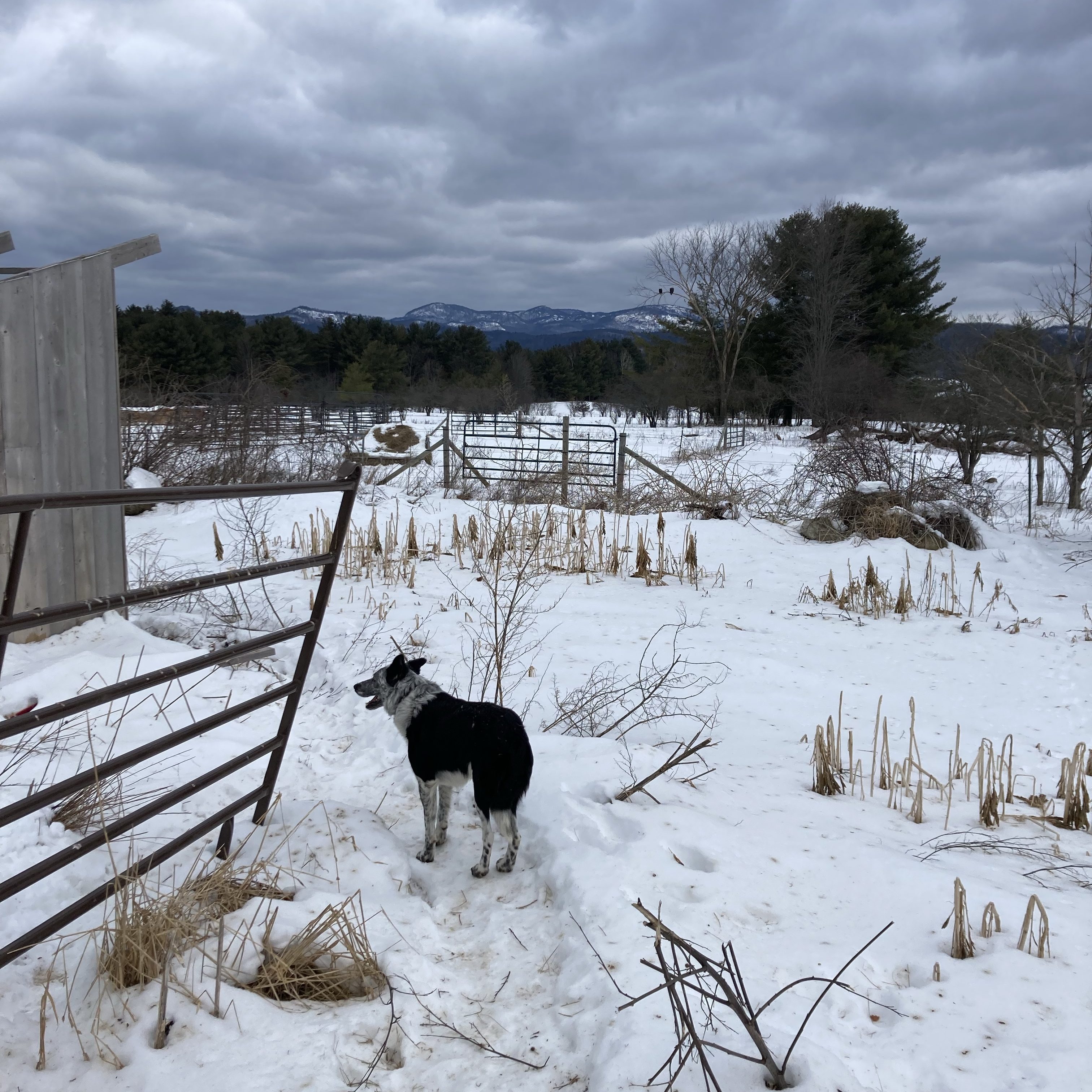
There is a pair of Bald Eagles that visit our farm regularly this winter. Can you find them in this picture? They are such a large bird that even with a phone camera with no zoom you can see them!
 Reber Rock Farm Blog