
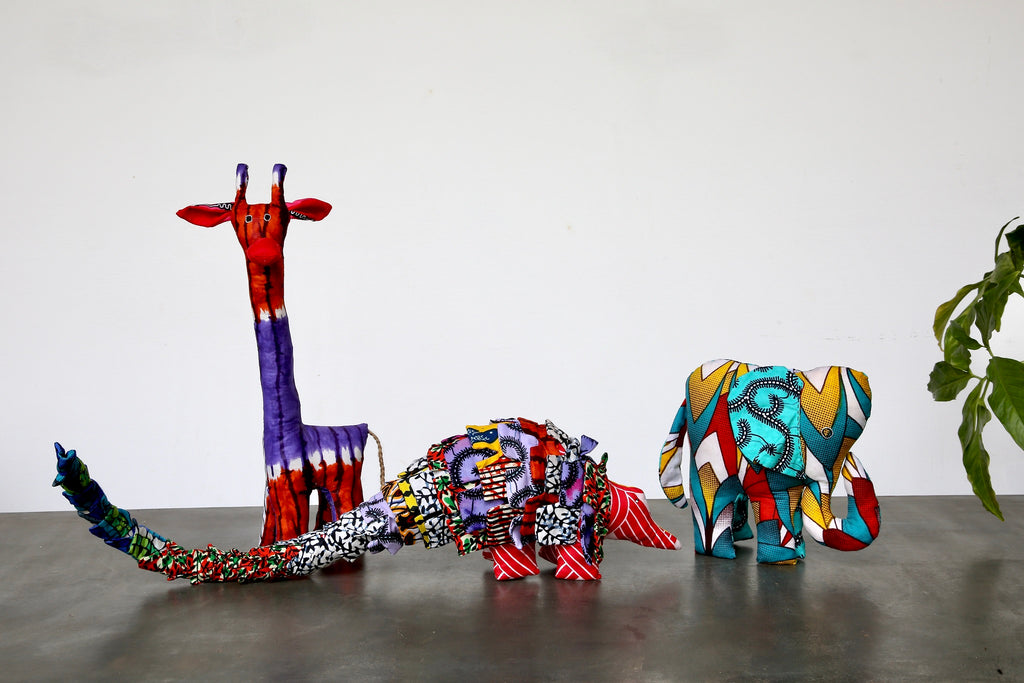
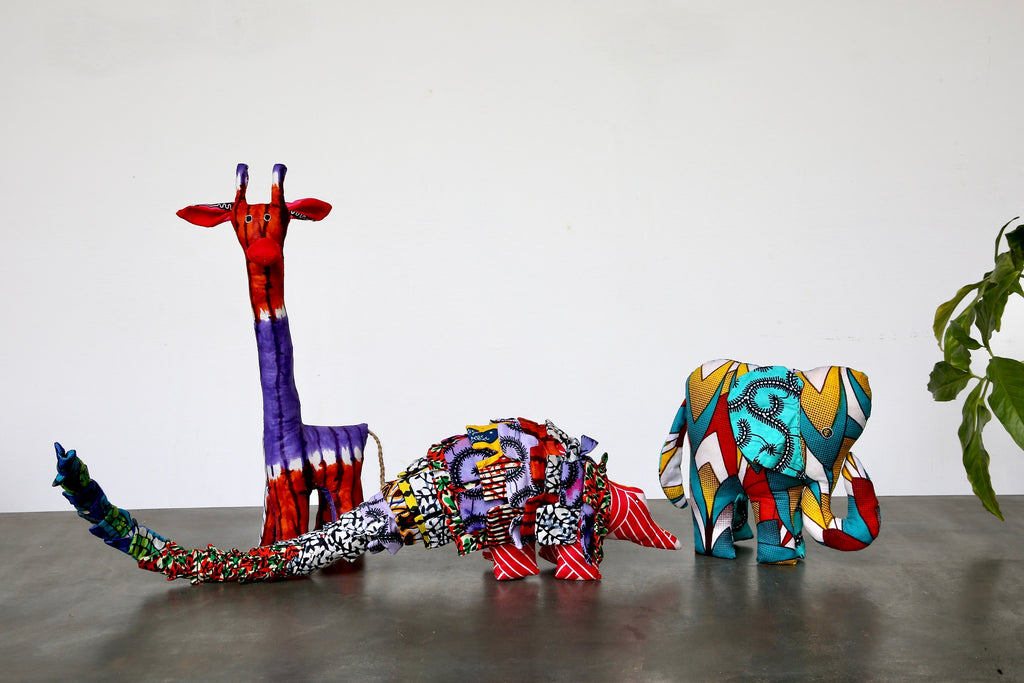
This week we are expecting a delivery from Bangui, Central African Republic. To explain why let me take you back in time:
The first time I spoke to Racey it was just after 5:00 am on a Thursday morning in October of 2010 in the West Barn at Essex Farm, here in Essex, NY. I had arrived there the afternoon before to learn more about what Essex Farm was up to. The dairy cows jangled softly in their stanchions as they waited for milking in the dim light of the barn. While I helped Racey untangle burdock burrs from the cow tails I learned that in a few days she was leaving for the Central African Republic (CAR). I remember biting my tongue in an attempt to sound knowledgeable, was that a region of the continent or a specific country?
My next thought was: “damn, she’s leaving the country.” The spark of interest would have to wait and off she went to Bangui, the capital of the Central African Republic. (You can read about our story in Kristin Kimball’s memoir Good Husbandry.)
I spent the fall and winter working with Mark and Kristen at Essex Farm (and Timbo, Asa, Courtney, Chad, Kim, Jay and K-Fiegl), and I learned that Racey had come to Essex Farm to work the previous summer, and was now working half the year on the farm and the other half working with small farmers in CAR. Two disparate and somehow similar agricultural worlds: small scale, direct to consumer agriculture in the Adirondacks in Northern New York and small scale, subsistence farmers in CAR. Google says it is 6,105 miles (9,825 km) from our farm to Bangui, the capital where she was based.
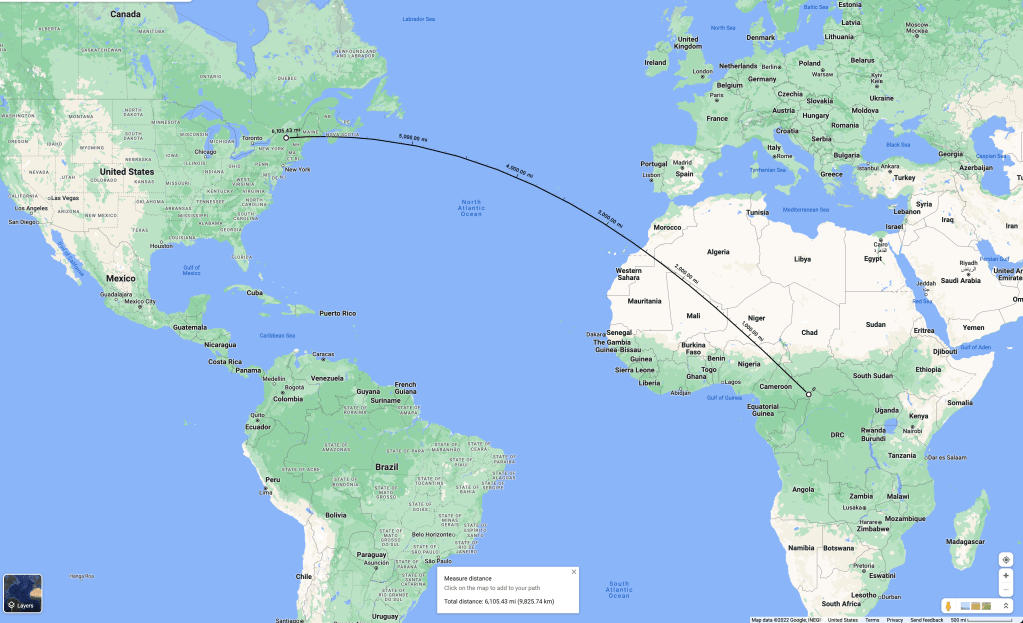
Looking at the map, the picture represents the distance well. The climate and growing season is different, the rocks and soil are different and yet Racey would make the long trip to apply her diverse skill set to each community.
Life in Africa was a new perspective for me. I learned a new meaning of poverty and resilience from her stories of the Peace Corps in Mauritania and development work in Mali and CAR. What did it mean to help a community? She had seen first hand the attempts by aid organizations to “help” by giving food and resources, which create dependency in the community and a hollow vacancy when the funding or winds of politics shift.
In the beginning of 2013, we officially started Reber Rock Farm, and in March I drove Racey to Montreal to catch her flight back to Bangui, CAR. The political climate was tense in CAR and before we got in the car Racey got an email from her boss warning that the trip might be cancelled or cut short. By the time we had crossed the border into Canada and were approaching Montreal, she got a call telling her not to board the plane and return home. Three days later there was a military coup and the civil conflict had begun.
In the years that followed, as we began our own farm business, Racey continued to learn and work in CAR, often traveling there during the winter months when Reber Rock work was slower. Racey met many friends in her travels, and one name was consistent: Charlotte. Charlotte and Racey met in Bangui as running partners, running was just the beginning.
Charlotte was born and raised in CAR and she and Racey shared many interests, in particular the role of private business in social and economic change. Charlotte visited our farm a few times throughout the years and in 2017 she and Racey decided to start a business together. They named it Ndara.
Here’s a short blurb from their website on the beginning of the Ndara story:
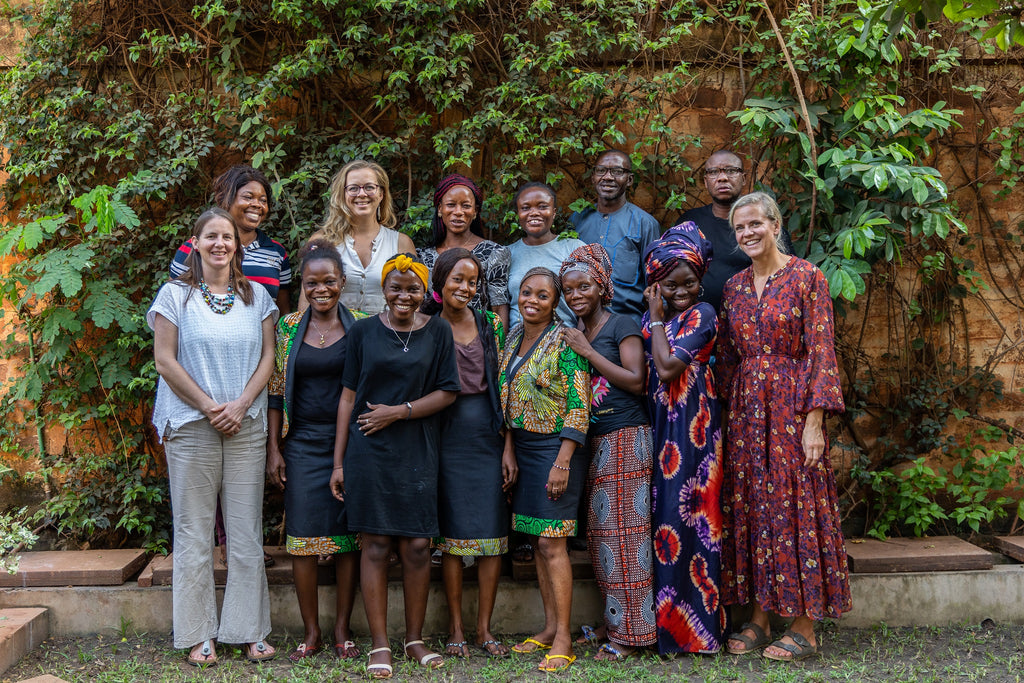
A STORY OF RESILIENCE, STRENGTH AND BRAVERY AGAINST ALL ODDS.
It’s a story of how resilient Central Africans live life in spite of violence, uncertainties and decades of an ever disintegrating state. In the face of adversity the Central Africans go about their daily lives like anyone else. They work, they plant, they celebrate and mourn. They take care of each other, build communities and raise their children as best they can.
And so, the idea of Ndara was born. A company that would provide stable, professional work opportunities for Central African artisans while using its public platform to share the joy, resilience, beauty and creativity of Central Africans with the world.
Charlotte shared her idea of Ndara with her friend Racey. Racey had spent nearly two decades working with small farmers across Francophone Africa, and 7 years working with farmers in CAR. She saw firsthand how determined Central Africans were. Year after year, they planted seeds and planned their harvests, raised livestock and tended their orchards without knowing if new waves of inter-communal violence would prevent access to fields, or destroy harvests or livestock. She also saw how dependency on humanitarian aid destroyed this determination and provided incentives for people to present themselves as weak, in need and unable to cope.
Discouraged by the lack of sustained improvements to Central African livelihoods through humanitarian development programs in the Central African Republic Racey wanted to test a different model of progress and development through private business. She wondered if a business model that laid the responsibility of achievement and progress in the hands of each person involved would be a more sustainable way to improve the livelihoods of Central Africans.
Read more at: ndaratibeafrika.com/pages/the-ndara-story
Since 2017, Ndara has grown, hired and trained 14 full time artisans and has built a beautiful Boutique in Bangui. Racey and Charlotte continued to brainstorm the next steps for the business. What business model would they pursue? One direction they decided to try was an online store and global shipping. Simple, like so many products, just go to the website, place your order and it shows up at your door.
Seems simple enough?
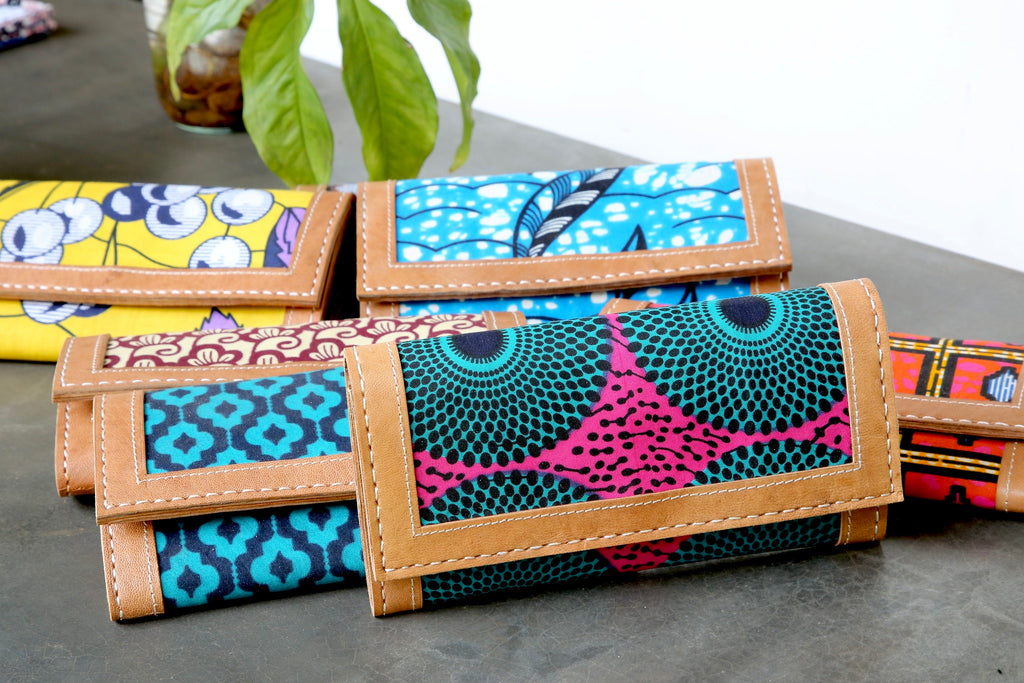
In November of last year we took a family trip to support and accompany Racey back to CAR to work with Charlotte on some of the logistics needed to make an on-line business a reality. Racey, Lewis, Lovett and I got to see first hand how the skilled artisans use simple materials and tools to make the colorful Ndara products. Racey and Charlotte hired a friend, Alex, to help with their startup marketing and logistics, and together they laid out the plan:
- Build a new online web store.
- Fill a pallet with Ndara products.
- Ship it to Reber Rock Farm.
- Racey begins order fulfillment from the farm.
This week marks a new chapter in the evolution and growth of this business. Racey and Charlotte have been working for months now on getting the Ndara product to Reber Rock Farm. The pallet has gone from Bangui, to Paris, then back to Bangui because there was no space on boats leaving Europe for North America. Then it was packaged in separate trunks and sent air freight to the farm where we have been waiting for it to finally reach us.
Most recently, the shipment was released from customs at JFK and went to Long Island, which seems like an indirect way to get to the Adirondacks, but I’m no freight expert:) We hope to have the product ready to ship out by midweek so stay tuned.
Please check out Ndara’s website, learn how your purchase can make an impact and share Ndara’s story. Ndara’s web store will go live on this Wednesday in their site.
 Reber Rock Farm Blog