
Like so many words used in marketing, “Pastured” can mean many things. So I thought I would explore what this means to us here at Reber Rock Farm and some questions you can ask when shopping for other Pastured products.
Pasture is the centerpiece of our farm. Pasture generally means perennial fields with a mix of grasses and other species. From a marketing and labeling perspective I like to think of two categories of “Pastured:”
- Pastured and supplemented with Organic Grain. This is what I like to call Pasture Raised Organic, or PRO. Animals like chickens and pigs have been bred to depend on some form of grain supplement to meet their nutritional needs. Even the wild ancestors of modern chickens and pigs foraged for seeds and nuts to balance their diet.
- Pastured and only eat Grass. We call this 100% Grassfed. Like our 100% Grassfed Beef and seasonally available 100% Grassfed Lamb. These ruminants are perfectly suited to eat only the green stuff they find in our pastures. No grain of any sort. I’ll talk more about why this is important in a different post.
For us, Grassfed means that the animals eat only grass, and, weather permitting, they spend their time outside. Pastured means the animals are fed some grain and spend their time outside. We also take great pride in how we manage our animals on pasture and the benefits this offers to the animals and the quality of their meat. Today I will focus on Pastured (chickens and pigs) and share why this is important to us. We have three primary goals of raising animals on pasture here at Reber Rock Farm:
- Improve the ecosystem used to produce our food.
- Healthy and humane treatment of our animals.
- Excellent flavor and quality of our meat.
Improve the ecosystem. An animal that is fed grain has a broader impact on the ecosystem. For our pigs, we have the ecosystems of other farms where the grain was grown, and the ecosystem of our own farm, where the pigs graze and forage. We choose to feed only Certified Organic Grain to ensure that the ecosystems where the grain was grown are treated with respect and are free of chemical fertilizers, pesticides or herbicides. Here at Reber Rock Farm, we safeguard our local carbon cycle by moving our animals frequently: chickens are moved every day in their field coops; pigs are moved every few days in their grazing paddocks. Grasses, and other species found in our pastures are well equipped to having animals pass over them. But they are not suited to prolonged impact from animals.
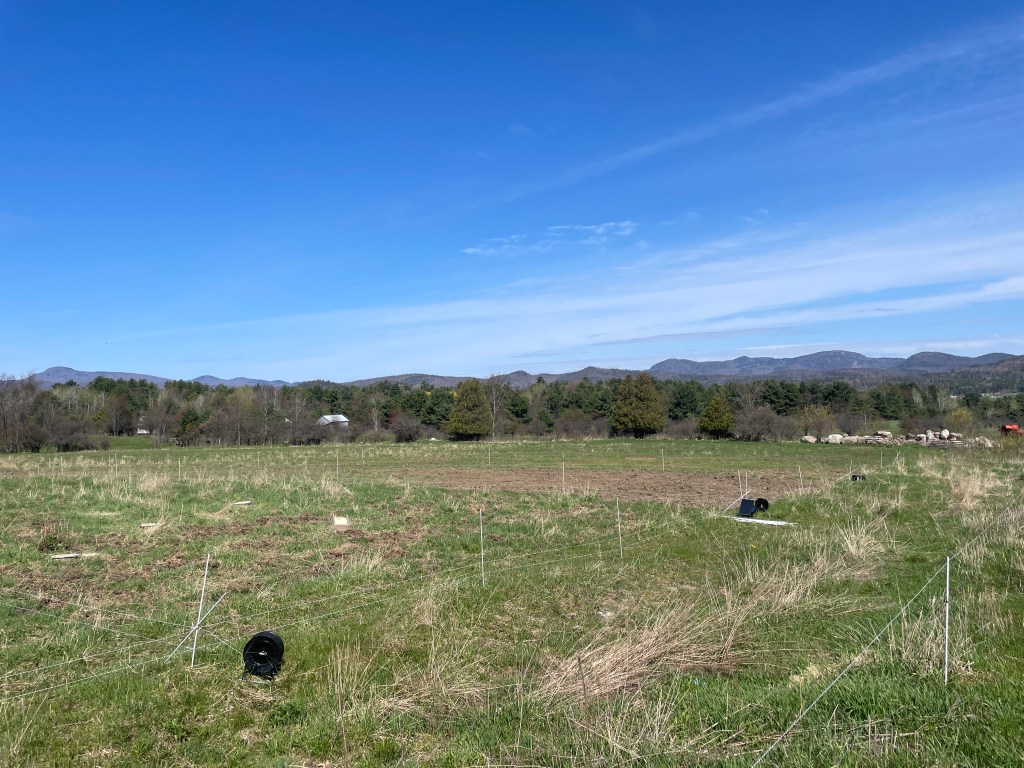
The picture above shows our pig pasture. In the foreground is the paddock they were moved into today, and they have already started rooting around and you can see the dirt they have turned with their strong snouts. As you look downhill, you can see their previous paddocks. The next paddock probably has too much dirt exposed, due to a rainstorm where the pigs had fun in the mud. Below that, the grass is already beginning to grow back in the paddocks where they were more than a week ago.
The process of grazing is an important part of the carbon cycle. Grasses store the majority of their energy and carbon in their root system below ground. They effectively pull carbon from the air, through the green leaves’ photosynthesis, and store it in the roots underground. When we graze and disturb the pasture, these leaves get cut short or trampled or turned over by pig snouts. So the plants shed their roots to balance the ratio of roots to leaf. The carbon is left in our ground, helping build soil structure and feed the microorganisms in our soil. Then the plants start growing leaves again, absorbing sunlight and CO2 and building their roots again, and the cycle continues.
The most important piece of this puzzle is that it is a cycle. If the pigs stay rooting on the grass for more than a few days, or if the chickens live in a barn and have “access” to the same pasture day after day, the plants become stunted or die and the cycle is cut short.
Healthy and Happy Animals. One of the great follies of modern industrial agriculture is the host of problems it has created. Cram 20,000 chickens or hogs into a confinement barn, and you suddenly have air quality problems, disease, cannibalism, and animal waste pollution. Proper management on pasture offers a holistic solution. The fresh breeze of the Adirondack Mountains cures our air quality problems; disease is practically nonexistent with fresh pasture; animals are never stressed with fresh grass, bugs, and roots to eat; and their waste is always adding nutrients and fertility to our pastures, improving things for the next time around.
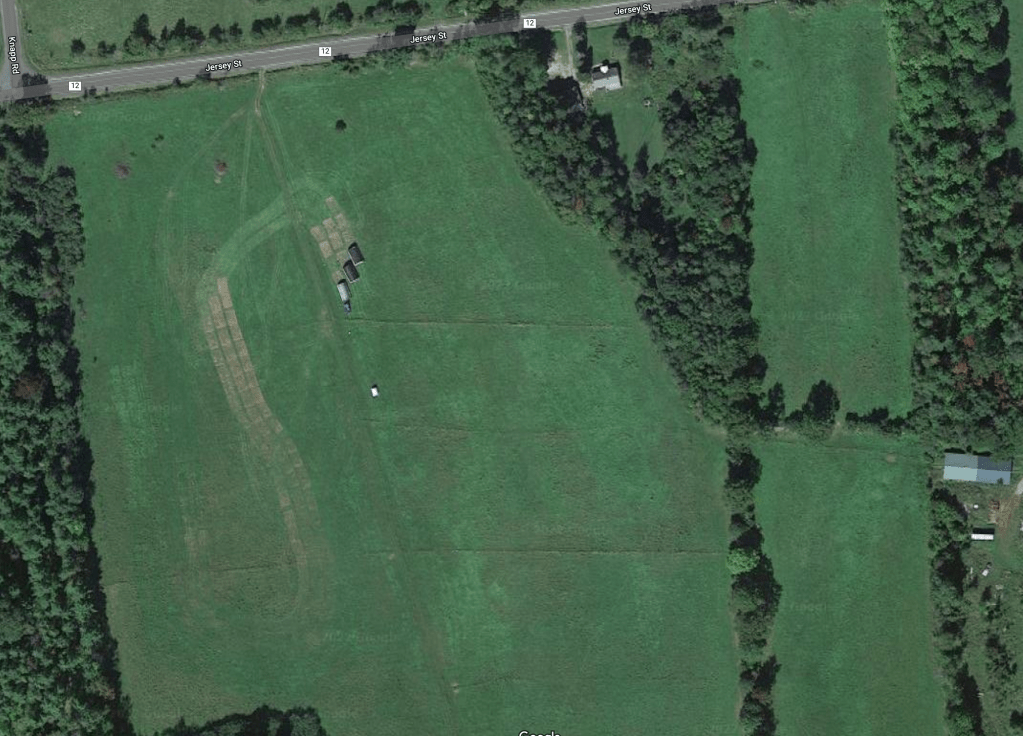
Google Maps updated the satellite imagery of our farm. Check out the chickens in the field. In less than 2 weeks, in the height of a dry summer, the manure left behind has turned into bright green grass that the cows will greedily gobble up.
Excellent Flavor and Quality. The diversity of diet, vitamin A (beta carotene) from fresh green plants, and vitamin D from the sun all enhance the flavor and nutrient density of meat we harvest from our pastured chickens and pigs. Exercise and romping also build muscle tone and flavor without adding toughness.
Now you know a few key questions to ask the next time you’re shopping for Pastured Meats:
- What type of grain do you feed? Is it Organic?
- How often do you move your animals?
- Do your animals live in a barn and sometimes go outside, or do they have what they need while living on pasture full time?
If you have any questions about how we raise our animals and why, do not hesitate to ask. Leave a comment below, find us on Facebook or Instagram or email me at: nathan@reberrockfarmkfarm
 Reber Rock Farm Blog