
I sat down to write about cooking this week, and it turns out that google and most search engines have picky stipulations on how to format a “recipe.” I suppose this makes sense, so that when you search “Roast Beef Recipe” you have those nifty recipe suggestions at the top of the search bar. So I thought I would take a stab at the recipe game since a good recipe is worth it.
I like to think of a recipe as process and proportions defined by a desired dish. I set out to have roast beef that was quick and easy, and from one of the more budget friendly roasts from the beef: Sirloin Tip Roast (you can also make this recipe with a Top Round Roast). In keeping with my weeknight recipe idea I also did not pull out my roast until the morning I planned on cooking it. With these parameters I set out to make the best roast beef I could, so here’s what I came up with:
The concise recipe is outlined below in the google friendly recipe format, but I’ll include my own descriptions here with some pictures.
If you’re in a hurry to thaw meat there’s always a trade off. When frozen meat thaws quickly it releases a lot of water, drying out the meat. This is why I suggest thawing meat in your refrigerator overnight. A large roast can take even longer to thaw, so how to thaw a 4 lb Sirloin Tip Roast in time for dinner? I decided to use a brine.
Brining
A brine is basically a salt water solution used to alter the cellular structure of muscle (meat) to retain more water. This helps with tenderness and juiciness and can add flavor as well. Brining also thaws a cut of meat quickly without drying it out. So I took the frozen roast out of the freezer and put it in a quick brine after the kids got on the school bus and we had yummy roast beef for dinner that night. Here’s how I did it:
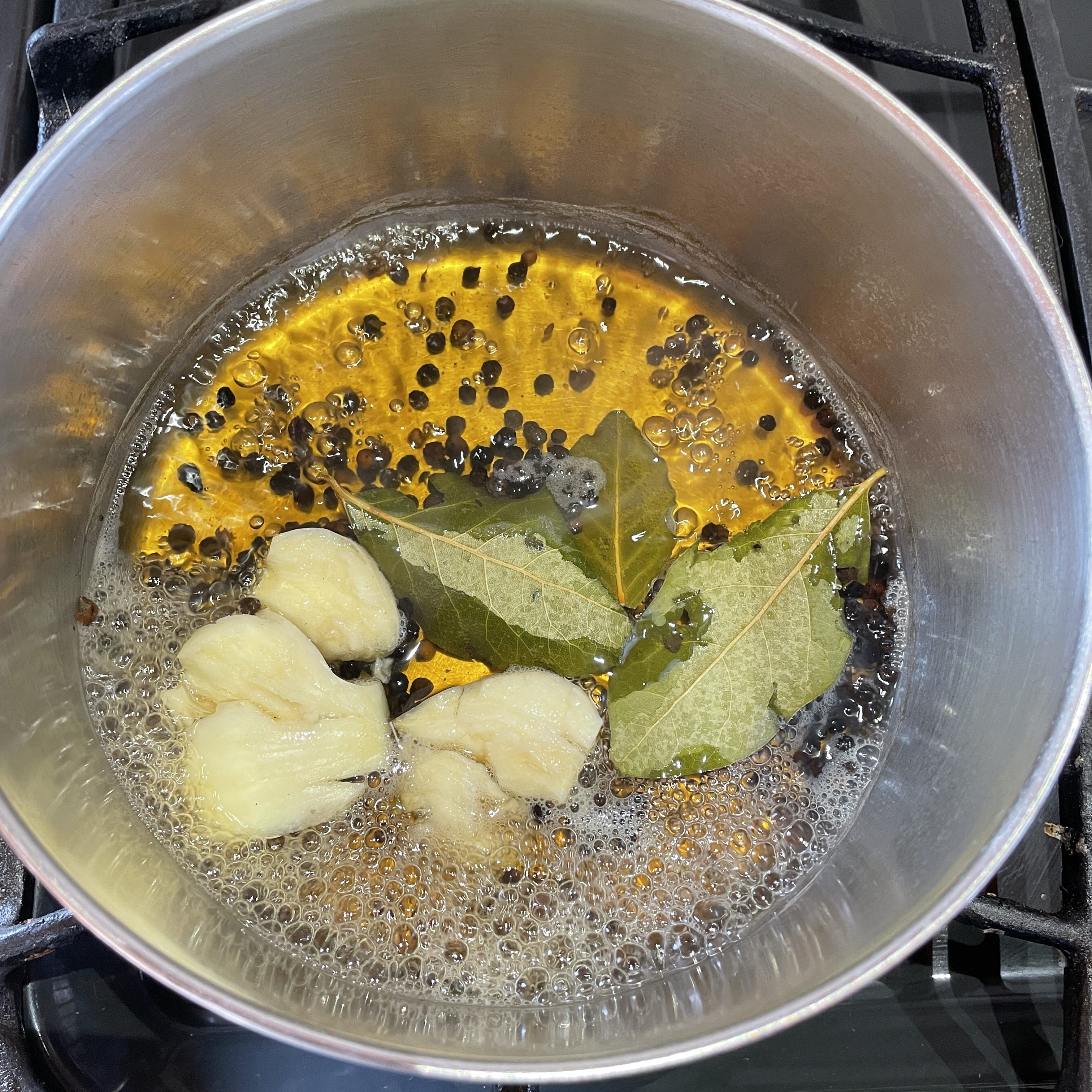
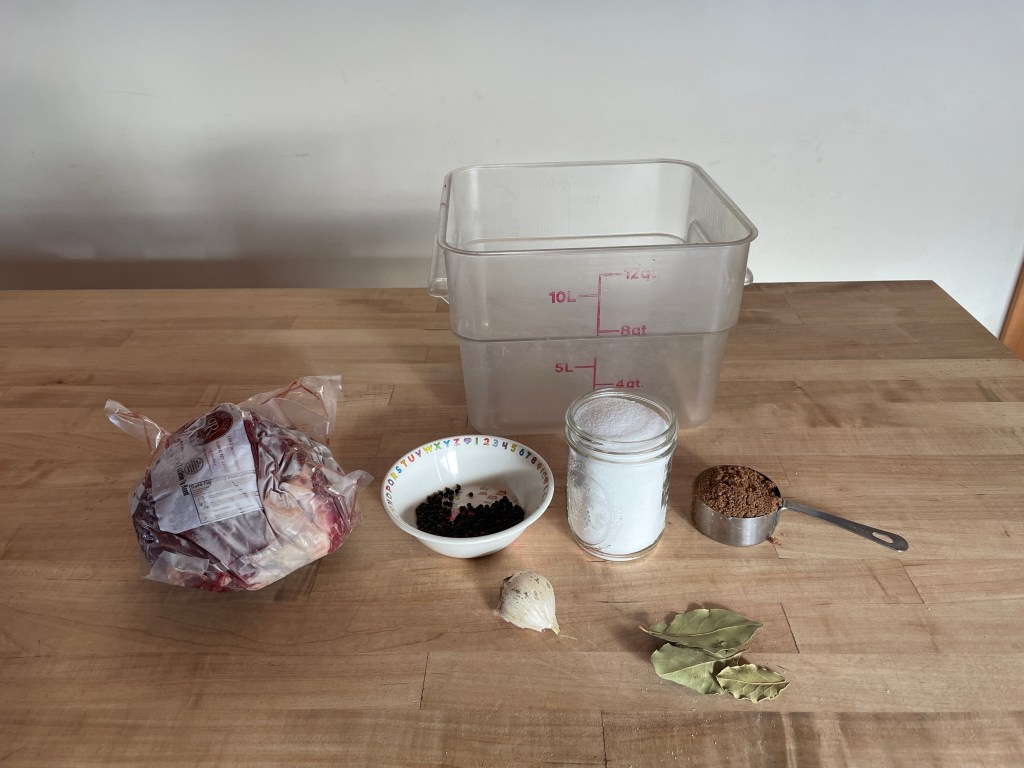
For added flavoring take some bay leaves, black pepper corns, and garlic (crushed to loosen flavor) and put them to boil in an inch of water in a pot on the stove. While this simmers to infuse the flavors into the water, find a suitable container that is big enough to put the roast in and cover with water. A large salad bowl, or in my case a large “Cambro” was what seemed best (see top photo).
Mix 1 gallon of water, 1 3/4 cups of salt and 1/2 cup of brown sugar (feel free to omit the sugar if you prefer) to make the brine. When the pot on the stove has simmered long enough or you need to move on to the next thing, mix the garlic, bay and pepper into the brine and submerge the roast.
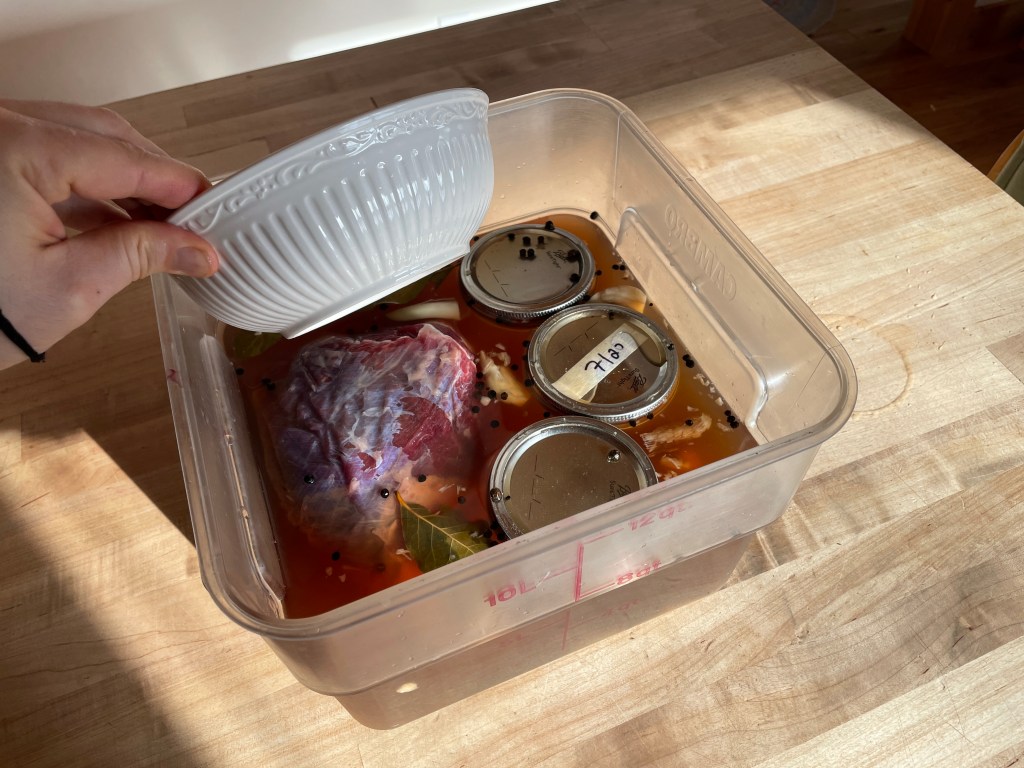
I put the roast in the brine and found that there was not enough brine to cover the roast. So I added some mason jars full of water to my brining container to displace some of the brine so it would cover the roast. A breakfast bowl to weigh the roast down to keep it covered and I’d say it took less than 20 mins to get the roast in the brine with some photo positioning included.
Cooking the Roast
I put the roast in the brine by 8:30 am. I took it out at 3:30 pm, so for this dinner I did 7 hours of brining. I removed the roast from the brine, patted it dry with a kitchen towel and set the oven to preheat to 250 F. I found the roasting pan, roasting rack, meat thermometer, my favorite cast iron and put the pan on the stovetop to heat up.
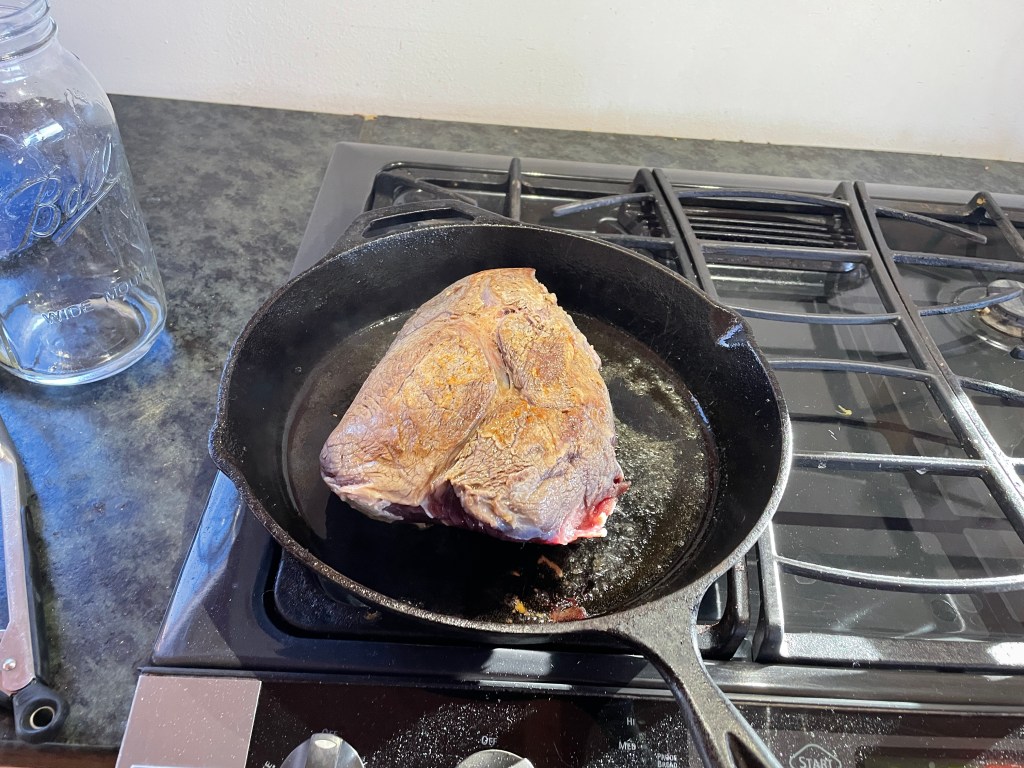
Depending on who you ask, searing a roast has many purposes. For me it is for texture alone. I like a crispy outside and since I was going to employ a slow roast, there will not be much crisp to the outside. So I did a quick sear in the cast iron before putting the roast in the oven.
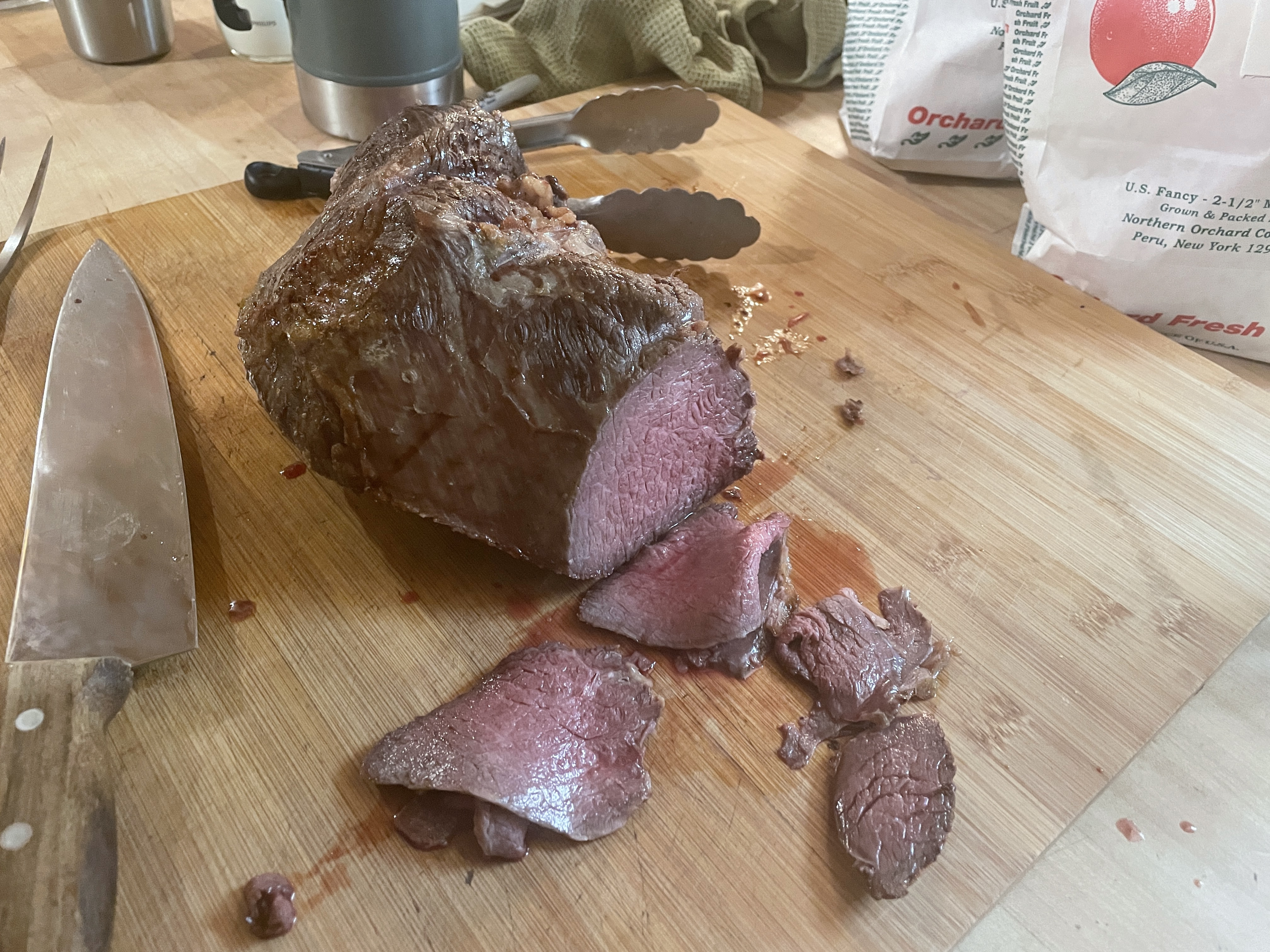
I believe the key with roast beef is to get your internal temperature where you want it. For me a rare to medium rare roast is perfect. So I cooked the roast for about 1 1/2 hours at 250 F to get to 120 F internal temperature of the roast. Then to see if we could get some more crisp to the outside I raised the oven temperature to 500 F for another 20-30 minutes until the thermometer said internal temperature of 130 F and I removed the roast to rest for 10-15 minutes before carving and serving.
Carving and Serving Tips
For best eating we found if we cut thin slices they were easy to eat with fingers or cut with a butter knife. The particular Sirloin Tip Roast we cooked had two muscle seams running through it. These are the dividing membranes between muscles in the animal. They are wonderful flavor but very difficult to chew when cooked like this. So after some chewing and investigating I was able to cut around them for some delicious eating. We served the roast beef with pan fried potatoes and sautéed onions, carrots and cabbage.
Recipe
Weeknight Roast Beef
A delicious and budget friendly weeknight meal with room for hungry eaters or leftovers for sandwiches tomorrow.
Ingredients
- 3-4 lb Beef Sirloin Tip Roast or Beef Top Round Roast
- 1 Gallon of cold water
- 1 3/4 cup of salt
- 1/2 cup of brown sugar
- 4 bay leaves
- 2 tablespoons of whole black pepper corns
- 1-2 large cloves of garlic
- 1 sharp knife for slicing
Directions
Brine the roast
1. From the 1 gallon of water take 2 cups and mix with bay leaves, pepper and garlic in a small sauce pan, bring to a boil and let simmer for 20 mins.
2. Mix brown sugar and salt and the rest of the water in a bowl or container large enough to soak the roast in, stirring vigorously to dissolve the sugar and salt.
3. Stir in the bay leaves, pepper and garlic water.
4. Submerge the roast in the brine, use a plastic bag full or water or a bowl to keep the roast from floating.
5. Brine for 7-8 hours.
Roast Beef
1. Pre-heat the oven to 250 F
2. Remove roast brine and pat dry.
3. Heat a dutch oven or cast iron skillet to medium high heat.
4. Add some lard or cooking oil to the pan and sear the roast.
5. Leave roast in dutch oven or transfer to a pan with roasting rack for a more even cooking.
6. Cook in the oven for about 1-1.5 hours until internal temperature is 120 F.
7. Then raise oven temperature to 500 F and cook until internal temperature is to desired doneness. I would recommend removing roast at 130 F for a medium rare roast.
8. Let roast rest for 10-15 minutes before serving.
Serving Notes
– Cut thin slices from the roast.
– Watch for sinew and gristle seams that run through the roast and cut around these as they can be tough chewing.
 Reber Rock Farm Blog