We shifted rhythms again this week, and Lewis and Lovett were home with me. Our weather has continued to stay warm, we still have not had a frost, and the few tastes of chill in the mornings remind me of the perspective shift and physical adjustment that comes with the season change. This week 38 degrees in the morning inspires a full set of long underwear, and will turn to sweaty, take-the-layers-off weather come March. For now, we enjoyed the warm afternoons, forgetting many pairs of gloves, hats and jackets in various places around the farm.
The mind of a 4 year old is an amazing, flexible and creative place. While my adult/parent mind can quickly anticipate what might happen in the future, and remember all sorts of useful and useless facts of life, the transition from having the kids in school and time that grants me as a business owner and individual, to abruptly having no school and no outside care (kid in quarantine) is an emotional roller coaster ride. Ellie, on the other hand, hit the ground running with no other signs of disruption other than a few out-loud wonderings about what her fellow classmates and teachers were up to.
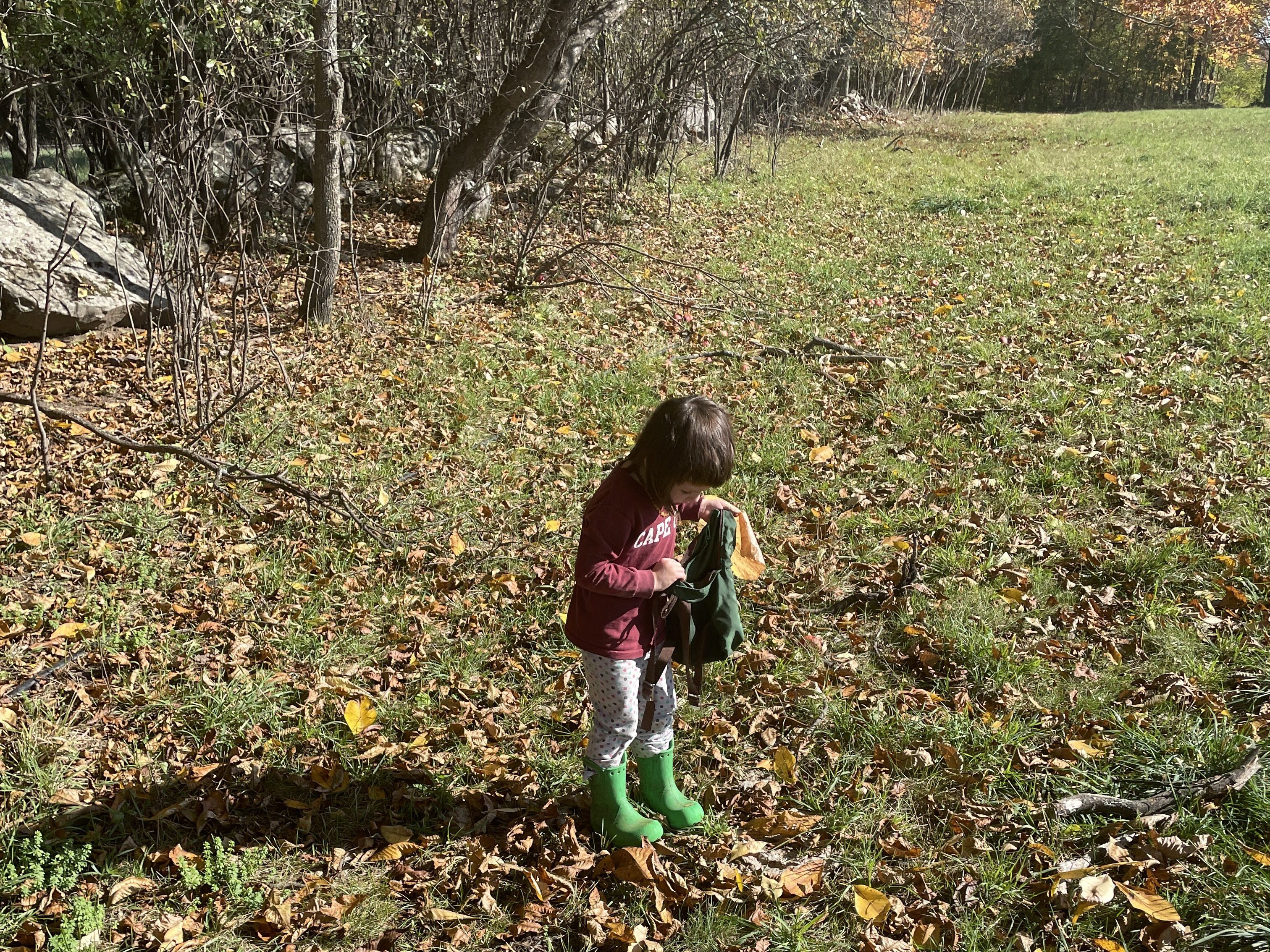
On Monday morning, in the throes of my own existential crisis about my value as a business owner vs as a father, Ellie exclaimed at the end of breakfast: “Papa can we get some pickory nuts for the pigs?!!” She was clearly excited about her idea, and I had no clue what she was talking about. We have been regularly doing the pig chores as a family, and both kids are very invested in the group. After some story-telling and explaining from Ellie and questioning and listening on my part, we determined that the proper pronunciation was Hickory (with an “H”) and she remembered a comment I had made on a walk a few weeks ago that the pigs would likely enjoy the hickory nuts she had found. With that our morning plan was born.
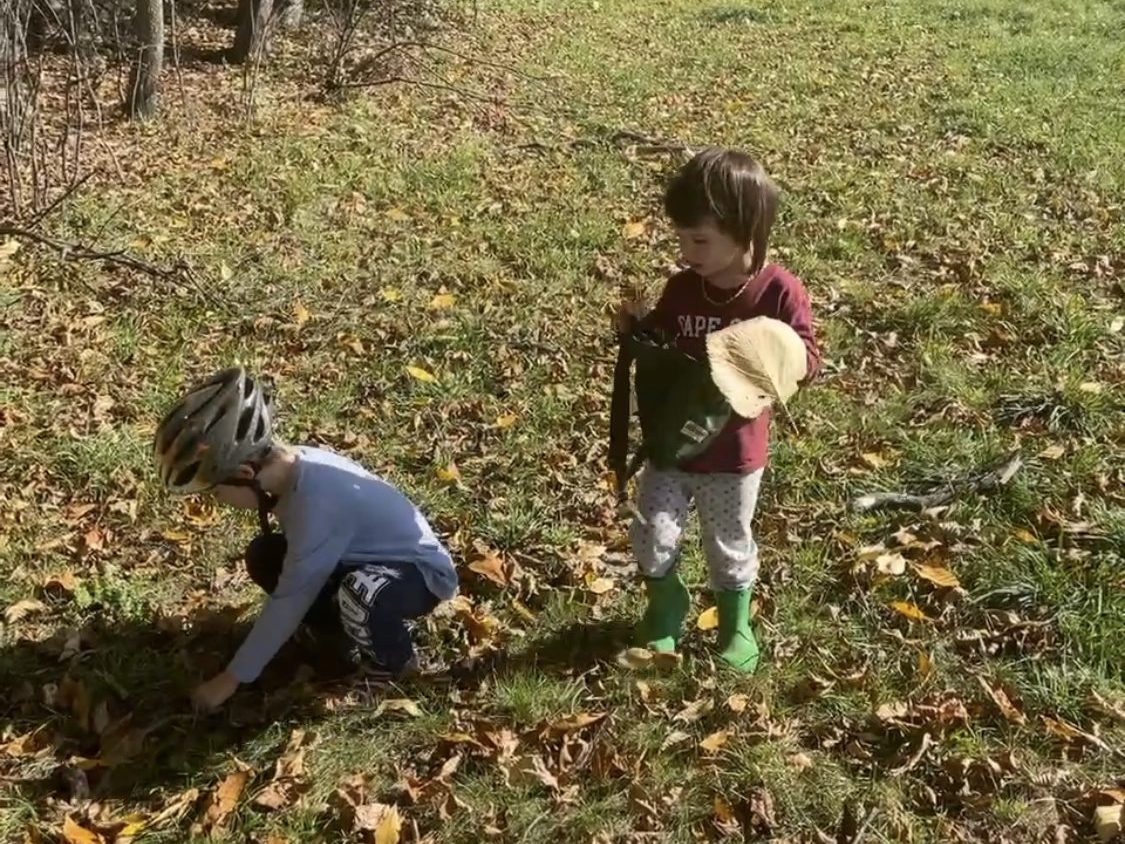
I do not know much about the fruiting cycle of the hickory, but we have some impressive shag bark hickory trees in some of the older hedgerows in our pastures. The ones we had seen with those distinctive green and shinny fruits were down the road a ways and so the trip called for helmets and bicycles. Upon arrival, the first hickory we found yielded plenty of brown hickory leaves, which had fallen to the ground, but not a single nut. We searched in the grass and the leaves and only found a few empty shells. We could see a few larger trees farther down the row so we kept looking until finally under the largest of the hickories we spotted a hickory shell with a nut inside! A crack in the outer shell let us see the tan nut inside. The hunt was on.
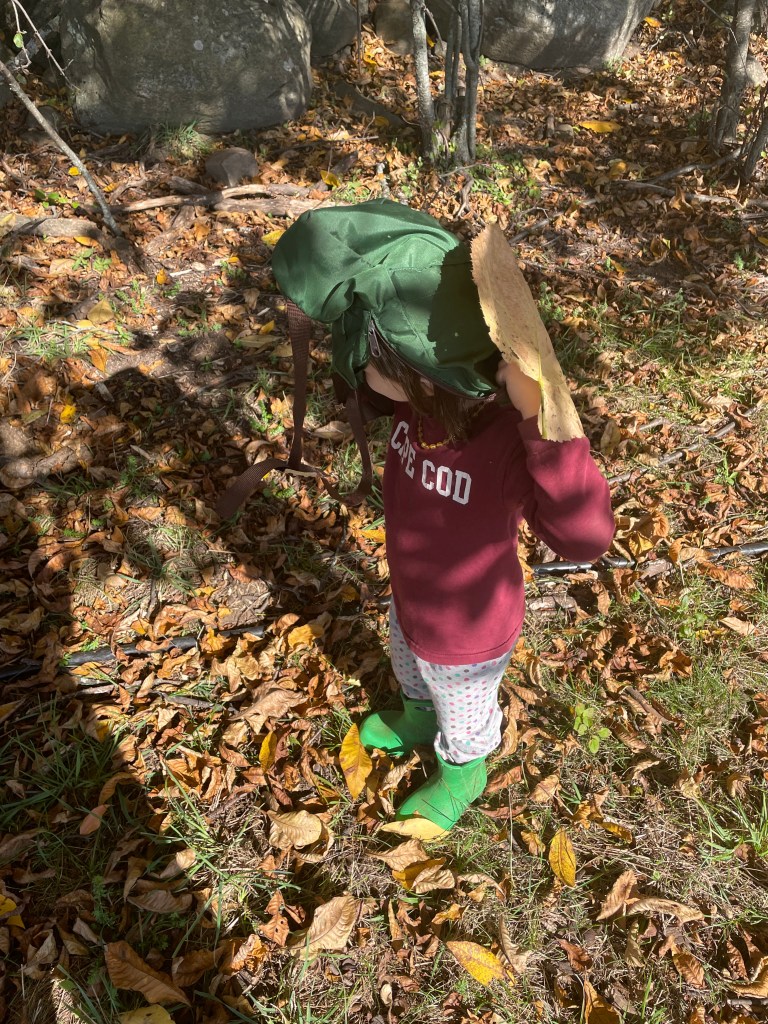
We were clearly late to the nut feast and we wondered who had taken all the nuts? There were enough broken and discarded shells to corroborate our memory of a few weeks ago when you could practically skate across the ground on the round, green nuts. It was probably the squirrels and the chipmunks we concluded, and with some scavenging and leaf brushing we loaded our back packs with as many nuts as we could find and headed back to our hopefully interested pigs. I’ve never actually fed a hickory nut to a pig, I’ve read about wild boars foraging on tree nuts, and I’ve certainly heard about farmers running pigs with oaks, hickories and other nut/fruit bearing trees, but there is only one way to find out for sure.
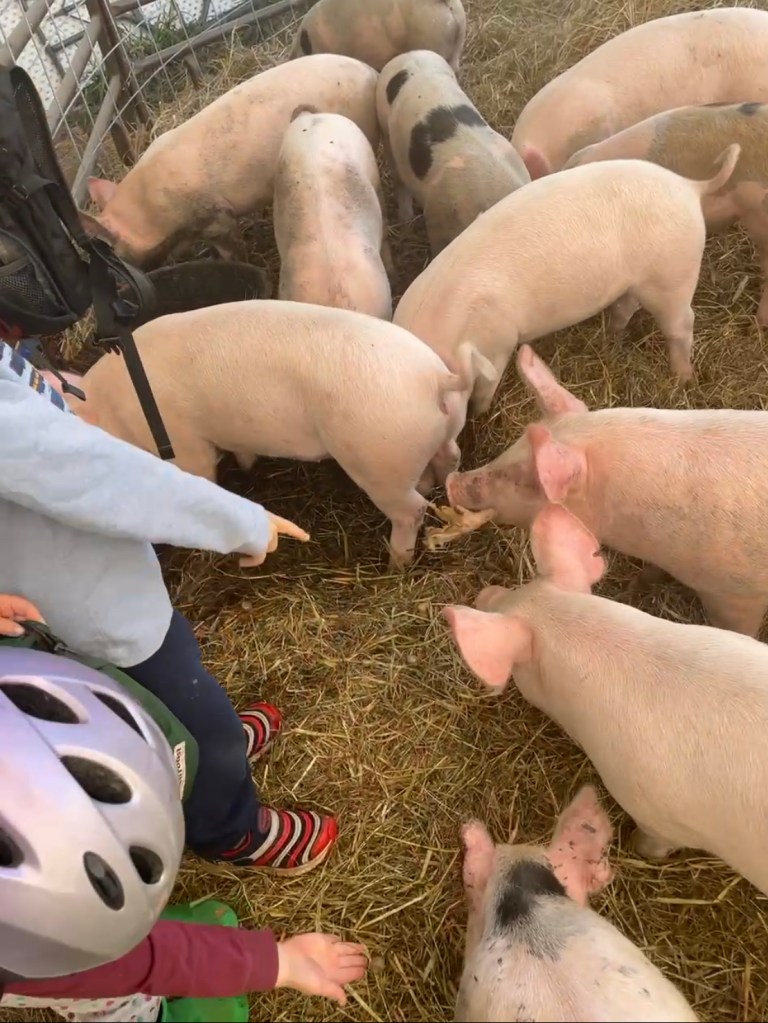
The pigs offered us a very satisfying reception to their new treat. There is no way these pigs have ever seen, let alone tasted a hickory nut. They were born in a barn at Essex Farm, and lived with their mama sow eating mostly sow milk, grain and lots of vegetable waste from the farm’s large vegetable production. (Essex Farm is not yet certified organic, but their produce and grains are all grown with higher than organic standards and any inputs that are purchased are certified organic.) Once that first pig sniffed and crunched the first of our dropped nuts the ensuing grunts must have indicated the delicacy at hand. The barn was filled with the crunching silence of focused pigs.
I am grateful for all the people who contribute to the farm’s operation. When I was the sole operator, a week like this would have crushed my optimism and created a stressful tightrope of trying to get too much done with the “burden” of kids in tow. I am certainly not immune to that emotional trap and I worked hard to overcome and then succumb, and work again to breakdown my own resistance to adjusting my expectations and plans for the week. Thank you to Gwen, Chad (and Layton:), Alyx, Bridget (and Cedar, Caleb and Treva:) and Holly and Healey for all your work.
 Reber Rock Farm Blog