Phew, what a week. I’ll dive into the details later, but it has been a busy week. After packing orders on Monday afternoon, we emptied one of our walk-in freezers, then disassembled it, loaded it onto a wagon, brought the pieces down to the barn, build the freezer up again, ran new wiring and got it running by Friday afternoon. We also got the final load of pork from our smokehouse and sausage maker which means we have so many fun pork products back in stock. This also means that the other walk-in freezer is full to the ceiling.
This round of pork represents a few changes for us. We’ve decided to make the switch to pastured pork that is fed Organic Grain. Our chicken is certified organic, but the pork is not, primarily because of how difficult it is to find certified organic piglets, which is a requirement for certification. So the pork is not certified organic, but the pieces we have control over we do the best we can: how they live when they get here, what they eat and how we process them.
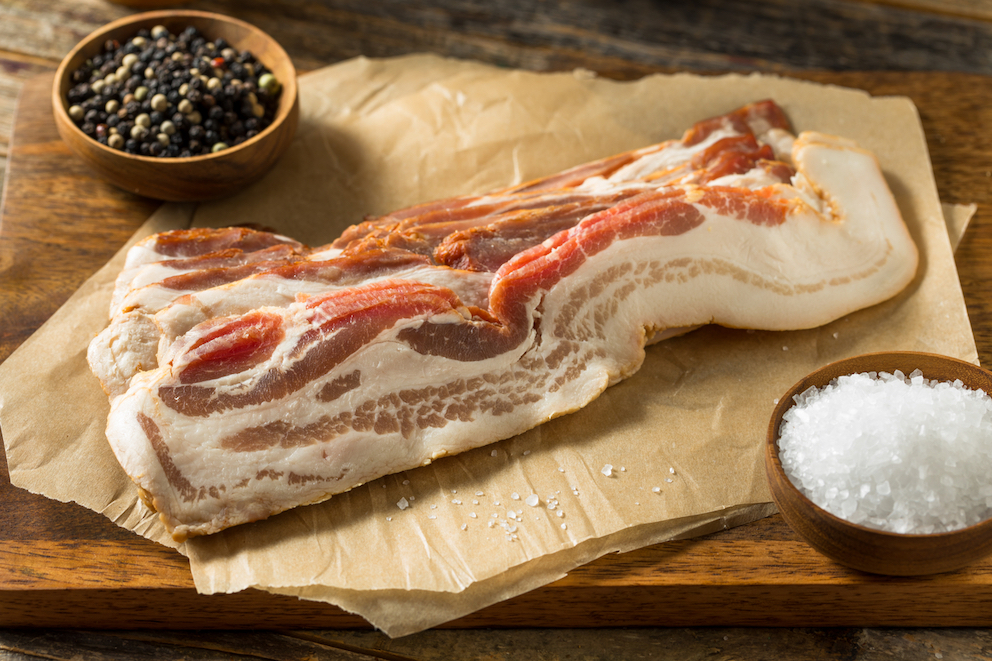
Processing is a very important part in the journey to taking a piglet to the bacon and sausage that is at your breakfast table. With pork, there can be significant additional processing that is done after the animal is cut up. For example: bacon. Bacon comes from the belly of the pig, but if you took that raw belly, cut thin strips of it and threw it in the pan it would not be bacon. The same goes with sausage. Much of this additional processing is not just about the ingredients used but the process itself. I spent much of the winter researching different smokehouses around the north east to find the best place to have bacon made, when a friend finally introduced me to Tom at Mountain Products Smokehouse in Lagrangevill, NY.
Tom and his crew make their own line of pork products and do custom processing for other businesses. To me this was already a good sign: any business that also sells what they make has a built in feedback loop. If they do not make good bacon the customer will tell them. What makes their bacon special for me is the recipe and process. As I wrote about last summer, most “cured” products contain nitrates and nitrites. This is for food safety reasons, but despite the fact that many products claim to be “nitrate-free” they just contain celery powder, which contains naturally occurring sodium nitrate. Tom, however, chooses to make a no-nitrate bacon that is just that: just pork belly, rubbed with salt and sugar, smoked then sliced. Food safety regulations require that he does extra testing in his facility since he does not use nitrates, but I’ve been to his shop and I am happy to eat anything he makes there.
Tom and his crew have also made our sausages this time around. They make an excellent sausage, and have worked with us to make two of our own flavors: bourbon fennel sausage and Italian Ragu Sausage (previously known as RRF Sweet Italian)
In short we have a bunch of new offerings to check out:
No-Nitrate Bacon
No-Nitrate Maple Bacon
No-Nitrate Canadian Bacon
No-Nitrate Jowl Bacon
No-Nitrate Smoked Andouille Sausage
No-Nitrate Smoked Beef & Pork Kielbasa
There’s much more to say on nitrates, smoking, sausage making, Organic Feed vs non-GMO and spring on the farm. But for now it’s time for bed and I’m looking forward to some bacon for breakfast!
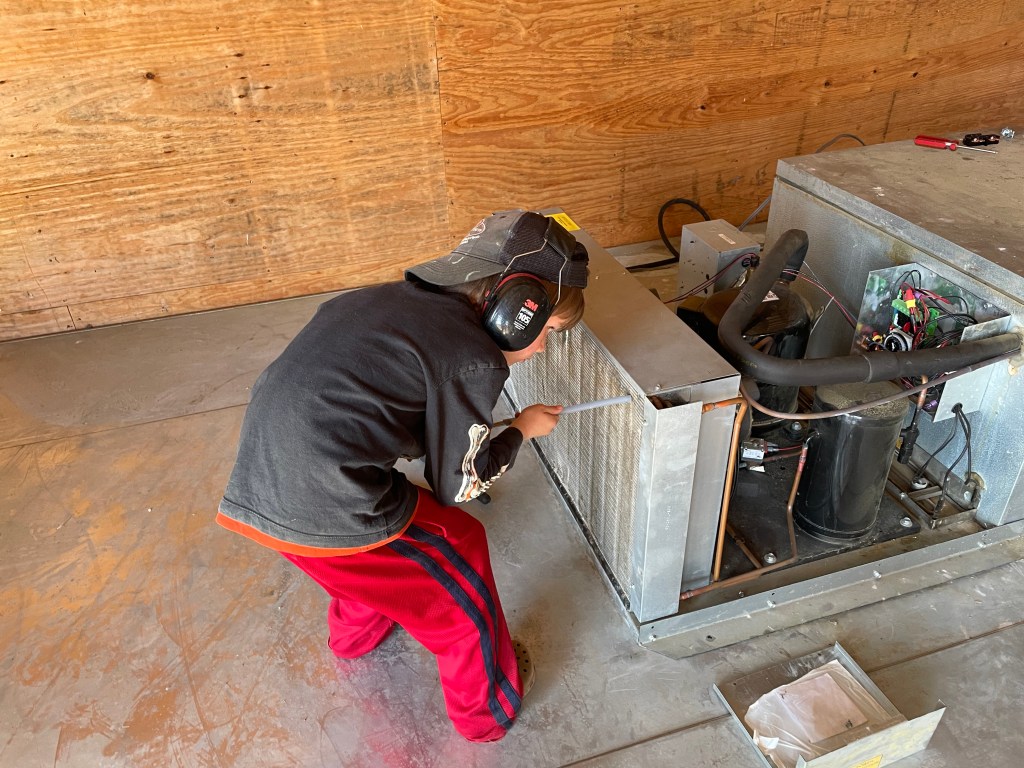
Here is Lewis, helping me for his spring break, using the air compressor to clean off the cooling fins of the newly relocated walk-in freezer.
 Reber Rock Farm Blog